Archive

Research Findings

16975553649_7ce3409edd_k

by Kyung Joon Han and Eric Graig Castater

There has been a longstanding consensus in the labor politics literature that countries and time periods with higher union density (the proportion of workers that belong to a union), union coverage (the proportion of workers covered by a union bargained contract, regardless of whether they are union members), and/or wage bargaining level (the level at which unions and employers bargain over wages, ranging from the firm to the national level, with the latter signifying a “higher” level of wage bargaining) are associated with lower levels of wage inequality.

Indeed, much of this scholarship has found that such “union presence” variables help explain a substantial portion of the cross-national and over-time variation in wage inequality in the wealthy democracies. However, recent evidence indicates that such a union effect on wage inequality disappeared during the 1990s due to the decentralization of bargaining structure as well as the decline of union density and union coverage.

In short, unions are only able to reduce wage inequality when they have substantial organizational strength.

In an article recently published in Research in Social Stratification and Mobility, we examine whether unions still have an effect on wage inequality, but do so by focusing on what we term the capital and skill mechanisms, the primary means by which unions reduce wage inequality.


Read More

Profiling_4_Ginny_Flickr_CC BY SA.jpg

by Paula McDonald, Paul Thompson and Peter O’Connor

A new study has revealed that 27% of employees have witnessed their employer using online information to ‘profile’ job applicants. Approximately 55% of organisations now have a policy outlining how profiling can and should be used as an organisational strategy.

Despite its increased practice however, most employees are not comfortable with being profiled. Over 60% believe they have a right to a private online identity that should not be accessed by employers. But only 40% of those surveyed reported they manage their social media activities with their current employer in mind.

What is profiling?

Most of us have probably ‘googled’ someone to find information about them. Perhaps we searched for information on a potential flatmate, a new colleague, or even a new boss. With the aid of an internet search engine, we can easily learn important details about people (e.g., their appearance, lifestyle choices, professional affiliations) before we meet them. Perhaps more controversially, employers can learn whether they seem like the ‘right’ kind of person to hire? This is known as profiling: the collection of online information for the purpose of monitoring and evaluating current and future employees.

The practice of profiling is not without controversy, with recent commentaries questioning the legitimacy of the practice. In particular, although personal information is publicly available, some have objected to its use based on employees’ rights to a private identity. In other words, there is some question as to whether profiling employees is a legitimate practice or whether it oversteps the boundaries of privacy.

To investigate this question from the perspective of employees, we conducted a survey study of 2000 employees across a range of occupational groups in Australia and the UK. We used this sample to determine the extent of profiling, the outcomes of profiling and the attitudes of employees towards profiling. We also looked at whether profiling depended on industry and profession and how often organisations defined the parameters of profiling in their policies.

Read More

8888818526_2be66404f0_k

by Allison J. Pugh

Income inequality is a major focus in today’s national agenda.  From the White House to the campaign trail to the halls of Davos, political and economic elites are joining a public conversation about the vast disparities between the top and bottom of the economic ladder.

But these conversations about income inequality lack one crucial focus:  job insecurity.

For lower income workers, studies indicate that knowing you’ll have a job next week is as important as the size of the paycheck that’s coming.  My own research shows that the impact of job insecurity extends beyond the individual worker or the workplace, and is felt at home, by spouses, parents, children and others.  The withdrawal of employer commitment raises the salience of commitment in all aspects of life.

Read More

30582358_90f82f813f_o

by David S. Pedulla

Most of us have family members, friends, or acquaintances that have experienced unemployment. It can be a brutal experience, economically, socially, and psychologically. A large body of academic research backs this up. There are far-reaching consequences of being unemployed. These effects span many domains of life, from health, to family dynamics, to psychological wellbeing. There is also evidence that unemployment can lead to lower earnings down the road.

Following on this line of research, a recent body of scholarship has asked whether there is also a direct effect of unemployment on being able to get a new job. In other words, do employers screen out job applicants who are unemployed in favor those who are currently working?

In general, the answer appears to be “yes.”

To investigate this issue, separate teams of researchers in the United States and Sweden sent fake job applications to apply for real job openings and randomly assigned some of those job applications an employment gap: a spell of unemployment. The studies found that employers tended to pass over the unemployed applicants in favor of applicants who were employed. The effects were strongest for longer-term unemployment (rather than short periods without a job) and current spells of unemployment (rather than unemployment in the past).

Read More

winter-wedding-20120203-001

by Alexandra Killewald

Through the second half of the 20th century, American women participated in the labor force at increasing rates. Divorce rates also rose rapidly in the 1960s and 1970s, raising concerns that the trends were related: perhaps marriages became less stable because women were no longer dependent on men for their financial well-being.

But women’s economic independence from their husbands isn’t the only way that money, work, and divorce could be associated. Another possibility is that couples who have few financial resources are more likely to divorce, maybe because they argue more about how to spend those limited resources.

Yet another possibility is that divorce is more likely when spouses don’t fulfill what’s socially expected of husbands or wives. Those expectations might include that the husband is employed full-time or that the wife takes primary responsibility for housework. In this case, it isn’t money itself that affects the risk of divorce, but the work spouses do, both in the labor force and at home.

In a recently published study, I tested these theories and whether the predictors of divorce had changed over time for American couples. In particular, I wondered whether American couples had become more accepting of wives’ employment and of couples sharing responsibility for housework, so that these behaviors no longer increased the risk of divorce.

Read More

myers_1

by Kristen Myers

Fox News in Chicago recently invited me to do a Father’s Day segment during the noon news hour explaining how “Dads today are better than ever!” Aiming for a feel-good piece celebrating dads, they prompted me to talk about how “real men” cuddle with their children. On the one hand, I cringed at the use of the term, “real men.” What is a “real man?” Although sociologists have shown that there is no one right way to be a man, the notion of “real” manhood remains salient in the popular imagination. The expression, “real men do x,” is typically used to call men out, to shame those who don’t do x into “manning up.” The popularity of language like “real men man up” reminds us that the rules we’ve made for men haven’t actually relaxed all that much, even though some dads are able to interact with their children in ways that their own dads never could have.

On the other hand, Fox News was using the expression “real men cuddle” ironically, to encourage traditional men to do something non-traditional, like show emotion. This gave me an opportunity to focus on ways that men can do things differently than they have in the past, how they’re “undoing gender,” as Francine Deutsch would say. More men today are able to physically and emotionally bond with their children without risking a blow to their manhood. The Pew Research Center has documented trends in the work world and the household that are permitting dads to be more involved than ever in childrearing and housework.The time is ripe for men, no matter how traditional, to take advantage of these shifts. Sometimes these men must be pushed out of their comfort zones in order to take the first steps.

Read More

looking-for-a-job-68958_640

by Crosby Hipes

Approximately one quarter of Americans suffer from a mental illness at any given time, with half of the country experiencing mental illness over the course of their lifetimes. People with mental illness can face devaluation and discrimination simply for having an illness with a negative label, which is known as the stigma of mental illness. Although some might assume that a person’s education, skills, and training are the primary factors determining their employment success, our study suggests otherwise.

In a recently published study, we found that even for job applicants with competitive resumes, having a mental illness label lowered employment chances relative to job applicants with a past physical injury.

Read More

Make up

by Jaclyn Wong

Is it possible to capitalize on your good looks?  The answer might depend on your gender, and whether you are “naturally” beautiful, or invest resources on your self-presentation.

Beauty is a valued trait in American society, and previous research suggests that physically attractive individuals are advantaged across many areas of social life.  For example, attractive students are considered more intelligent by their teachers, and are more popular among their classmates. Attractive women are more likely to marry husbands with higher socioeconomic status.  Even justice is not blind, as attractive criminal defendants receive less severe punishments than their unattractive counterparts.

Given these patterns, it is no surprise that attractive people also do better in the workplace.  Attractive job candidates are favored over unattractive applicants.  They are also more likely to receive better performance evaluations. As a result, attractive workers have higher earnings than average and unattractive workers.

But, is beauty an asset in the workplace for both men and women?  Beauty is a uniquely important part of the feminine gender role, but attractiveness may be less important for the traditional male role.  Thus, we might expect that attractive women are especially advantaged at work.

However, some researchers have found that beauty is beastly: being very attractive could hurt women, especially if they work in positions of power.  If attractive women are seen as more feminine, and femininity conflicts with the masculinized ideal worker norm, attractive women may be disadvantaged in the workplace.

Read More

Hair_Salon_Stations

by Kristen Barber

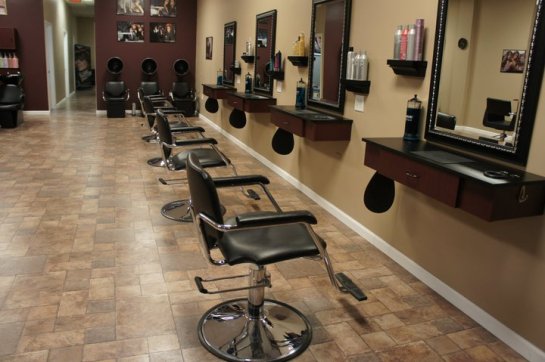
When I explain my research to people, they often ask: “What is a men’s salon, exactly?”In a fleeting interaction I might simply describe it as a salon dedicated to the primping and preening of men. The high-service men’s salons in my study tout stylish haircuts, fine manicures, exfoliating facials, and meticulous waxing services. But to more accurately explain what a men’s salon is involves understanding that gender is actively produced, not a static characteristic of a person or place.

In my article, “Men Wanted”: Heterosexual Aesthetic Labor in the Masculinization of the Hair Salon, I tackle the organizational efforts that make the salon an “appropriate” place for well-to-do, straight, and often white men. This is significant since the salon is historically associated with women and seems an unlikely place in which men can approximate culturally valorized forms masculinity.

One way both salons in my study masculinize the space is by demanding what I call heterosexual aesthetic labor from the mostly women workers. Aesthetic labor highlights the importance of workers’ appearances and use of their body in frontline service work, where employees interact face-to-face with customers. Workers are hired because they embody the aesthetic values of a retail brand, with white, middle-class workers, for example, reflecting the identities of white, middle-class consumers. This assures consumers they are in the “right place” for people like them and is a key mechanism in reproducing social differences and inequalities.

Read More

Neumann1

by Pamela Neumann

Why do so many people put up with highly contaminated living conditions? Conventional academic wisdom suggests that many communities do not protest environmental degradation because they are afraid of losing their jobs. They trade their health for the promise of employment.

My recent research in the Peruvian town of La Oroya, which is plagued by dangerously high lead levels, questions this dominant framework for understanding community responses to environmental hazards.

Instead, I argue that many residents’ reluctance to protest against pervasive lead contamination is tied to deeply held perceptions and beliefs about their town’s identity, and particularly a desire to protect their community from perceived outsiders. While material incentives do drive social action (or inaction) at times, it is also imperative to analyze how localized cultural processes—such as how people make sense of their own surroundings—contribute to the dynamics of social mobilization, as well as the reproduction of economic and environmental inequalities.

Read More