Protesters against Gov Walker's antiunion bill, Wisconsin's capitol rotunda (Image: Joe Rowley via Wikimedia CC BY-SA 3.0)

Protesters against Gov Walker’s antiunion bill, Wisconsin capitol rotunda (Image: Joe Rowley via Wikimedia CC BY-SA 3.0)

by Jonathan E Booth

Union security clauses that determine union dues and mandatory membership have become a contentious issue in the United States, especially recently. Depending on state legislation, unions have potential to negotiate either a union or an agency shop security clause in their respective collective bargaining agreement. Under a union shop, individuals are required to join the union and pay dues as a requirement for working in a unionized workplace. An agency shop does not require membership but does require payment of union dues after having been employed because the non-member still benefits from the bargaining agreement. Technically, all unionized workplaces with security clauses in place can only legally be agency shops due to a 1963 U.S. Supreme Court ruling that union shop clauses can only be enforced as agency shops (NLRB v. General Motors, 373 U.S. 734). And, dues that employees would have to pay if they determined not to join the union are reduced if they exercise their U.S. Supreme Court sanctioned Beck rights (Communication Workers of America v. Beck, 487 U.S. 735 [1988]) – only financially contributing to the union the proportion of union dues that covers representation associated to collective bargaining and contract administration.

It would seem that the above U.S. Supreme Court decisions (though somewhat harmful to union power) would be enough to provide those employees in unionized environments an “out” if they preferred not to join the union yet would still hold them somewhat accountable by having them contribute to the union – especially given they still benefit from the union contract but are not members in a unionized workplace.

Well, this is questionable. Previous to these U.S. Supreme Court decisions, the Congress passed the Taft-Hartley Act in 1947 which allows U.S. State legislatures to pass laws that ban the inclusion of security clauses in collective bargaining agreements. Thus, over the past 60 years or so, states particularly in the South, Rockies, and Great Plains have passed Right to Work (RTW) laws that prohibit unionized workplaces to require employees to join and pay dues to the union – fostering an influx of non-members in unionized workplaces. It is important to note that non-members in unionized environments are covered and protected by the collective bargaining agreement in their respective workplace.
Read More

Troubleby Mildred A. Schwartz

Following newspaper reports that the University of Medicine and Dentistry of New Jersey (UMDNJ) had been double billing and up billing Medicare and Medicaid for its hospitals’ services, it was put under the supervision of a federal monitor. At the time, UMDNJ was the only NJ state-supported public university devoted to the healing professions. It was a large university with multiple campuses and hospital affiliations dispersed through the state and home to three separate medical schools.

The monitor’s investigations revealed the range of UMDNJ’s misconduct. In addition to fraudulent billing practices, other examples included unwarranted grade changes for students, failure to let bids for contracts, and political cronyism, all while UMDNJ was governed by a board of trustees that rubber-stamped university decisions while seeking personal benefits.

In his final report, the federal monitor concluded that UMDNJ’s problems were due to the actions of a few bad apples because the great majority of employees were conscientiously performing their jobs. Media commentators, in contrast, attributed UMDNJ’s misconduct to New Jersey’s culture of corruption. I found neither explanation satisfying. The first was too narrow; the second, too broad. As a sociologist, my response was to look for organizational explanations. The result of my investigation was my new book, Trouble in the University: How the Education of Health Care Professionals Became Corrupted (2014 Brill).

Read More

Image: Koivth via Wikimedia Commons (CC BY 2.5)

Image: Koivth via Wikimedia Commons (CC BY 2.5)

by Jessica Looze, Aleta Sprague, and Jody Heymann

Over the past half century, the number of women in the workforce and their earnings rose markedly—not just in the United States, but worldwide. Yet in recent years, this progress has stagnated, and we’re still far short of gender parity in the economy. This is in large part because many workplaces continue to operate as if employees have no caregiving responsibilities. The global increase in women in the labor market hasn’t coincided with an equivalent rise in men’s share of caregiving. And in too many countries, laws and policies aren’t helping.

Indeed, the gender wage gap is largely a motherhood gap: unmarried women without children earn 95 cents on a man’s dollar, but for married mothers with at least one child under age 18, this figure drops to 76 cents. The gender gap at work is fueled by a gender gap at home. Women continue to spend more time doing carework than men, which is not simply a reflection of personal preferences: gender disparities in caregiving are embedded in, and perpetuated by countries’ laws, and policies. The consequences for the financial well-being of women and their families can be enormous.

To assess countries’ progress toward promoting gender equality in the economy and in caregiving, the WORLD Policy Analysis Center (WORLD) at the UCLA Fielding School of Public Health, together with our colleagues at the Maternal and Child Health Equity (MACHEquity) research program, recently released new globally comparative data and analyses on laws and policies affecting work and caregiving across all 193 UN member states. We examined the availability of leave following the birth of a child, for children’s health and education needs, as well as leave for the health needs of adult family members. The data show that while globally, countries are making some progress in promoting gender equality for workers with infant children, many countries still have a ways to go. Moreover, compared to infant caregiving, countries have made far less progress toward promoting gender equality when it comes to providing care for children beyond infancy or for elderly parents.

Read More

Walmart checkout

Image: Walmart via Flickr (CC BY 2.0)

By Herbert J Gans

One of the lesser known facts about the post-recession economy is that while new jobs are being created at near record levels, a significant number are bad jobs. No one knows exactly how many, but in April 2014,the National Employment Law Project, which measured job quality by industry wage level, reported that 44 percent of jobs created (pdf) between 2010 and 2014 were in lower wage industries, compared to 56 percent in mid wage and high wage ones.

The proportion of bad jobs was probably even higher since the study set the low wage floor two dollars above the current federal minimum wage. We also know that growing industries like health and other care as well as tourist related enterprises and many small manufacturing firms all pay minimum wages.

The trend may not even be new, for there is some evidence that the rising proportion of bad jobs goes back as far as the 1970s. John Schmitt and Janelle Jones of the Center for Economic Policy Research estimate the ability and willingness of employers to create good jobs has decreased (pdf) by a third since 1979.

More important, the forces behind the creation of bad jobs remain in place. Global competition with low wage countries, outsourcing of American jobs, increasing computerization and robotization, the political influence of corporate and Wall Street firms and the weakening of unions continue. Moreover, many industries and occupations that depend on low wage workers are still expanding. Consequently, the economy may continue to produce too many bad jobs even when it is also producing record profits for many employers and their shareholders.

Read More

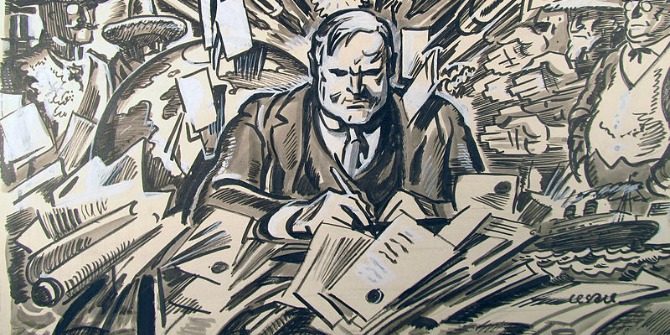
Image credit: Oscar Cesare (Wikimedia, Public Domain)

by Asit Biswas and Julian Kirchherr

Many of the world’s most talented thinkers may be university professors, but sadly most of them do not shape today’s public debates or influence policies. Indeed, scholars often frown upon publishing in the popular media. “Running an opinion editorial to share my views with the public? Sounds like activism to me”, a professor recently noted at a conference, hosted by the University of Oxford. The absence of professors from shaping public debates and policies seems to have exacerbated in recent years, particularly in the social sciences. During 1930s and 1940s, 20 percent of articles in the prestigious The American Political Science Review focused on policy recommendations. At the last count, the share was down to a meagre 0.3 percent.

Even debates among scholars do not seem to function properly. Up to 1.5 million peer-reviewed articles are published annually. However, many are ignored even within the scientific community: 82 percent of articles published in humanities are not even cited once. Rarely do scholars refer to 32 percent of the peer-reviewed articles in the social and 27 percent in the natural sciences. If a paper is cited, though, this does not imply it has actually been read. According to one estimate, only 20 percent of papers cited have actually been read. We suspect that an average paper in a peer-reviewed journal is read completely at most by no more than 10 people. Hence, impacts of most peer-reviewed publications even within the scientific community are miniscule.

Read More

Life of BrianAs an out-and-proud MAMIL (middle-aged man in lycra) I have a beautiful road bike. It’s black, red and sleek. It’s only fault is that it exposes my physical deficiencies: I can no longer blame the bike as I huff and puff up steep country hills. The other problem is that friends and family now buy me cycling books as gifts. The latest, So you think you’re a cyclist?, is a comedic take on the different types of cyclists.

One such type is the Hipster. The Hipster rides a fixie – a bike with no gears and no brakes to speak of. They rebel not just against restrictive bike parts but also corporate branding, so their bikes are striped bear of logos and details. They call it pure riding. These city-dwelling twentysomethings sport beards, tattoos and skinny jeans. They like to eat artisanal bread and hang out in cafés. The Hipsters’ drink of choice defines our current era – the ‘flat white economy’ – according to Douglas McWilliams. They work in creative jobs powered by the internet – in online retailing and marketing. When they’re not downloading apps, they’re developing them. Read More

Logo_INETThe Institute for New Economic Thinking (INET), was founded after the global financial crash by George Soros and a few fellow traveler financier/philanthropists to reframe the economics profession toward more plausible models. They hold the economics profession as at least partially responsible for the global crash, a position I share. Thus INET’s goal is to transform mainstream economic thought and by extension the policy models adopted by governments and central banks. This is clearly an unusual approach to policy and science development, a kind of terraforming from the outside-in. INET has a program of well-funded grants, conferences, and public relations vehicles (here is their YouTube channel). They even have a program for transforming the economics curriculum and another for graduate student participation in INET conferences.

The conference is populated by multiple economic Nobel Prize winners, young mainstream and older heterodox economists, policy economists, and a smattering of other scientists from sociology, political science, psychology, neuroscience, and even physics.  Mysteriously, my co-author Ken-Hou Lin and I were invited. Who could resist?

Read More

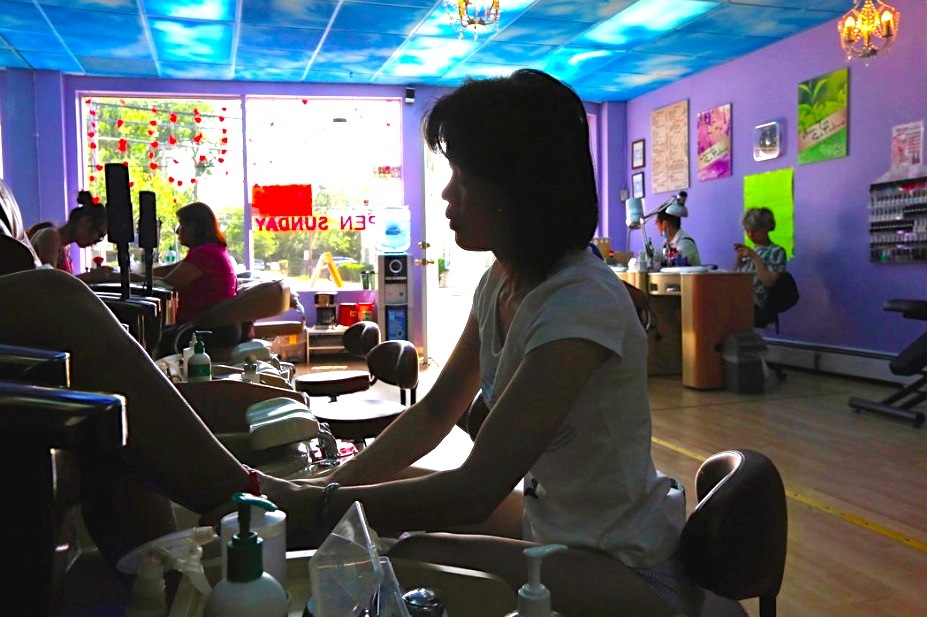
Credit: The New York Times

Credit: The New York Times

LAST WEEK The New York Times ran a set of stories that illustrate just how vital investigative journalism is, especially in an era in which savage capitalism seizes upon vulnerable groups-–immigrant women in powerless positions—and exploits them with impunity, knowing that governmental institutions lack the power, authority, or will to intervene. Written by Sarah Maslin Nir, the stories showed us that the outposts of bourgeois femininity—nail salons– located in virtually all commercial areas, have a dark side to them that is often quite hidden, even to the customers: rampant wage theft and health hazards that are everyday realities facing workers.

In a two part series that will likely win a Pulitzer prize (you read it here first!), Nir reports on the ways in which immigrant networks connect salon owners to a nearly endless flow of Chinese, Viet Namese and Latin American women, many of whom lack documentation or English language facility, and who are easily coerced to work long hours, even for no wages at all. Nir reports that “new employees must pay $100 [for being hired], then work unpaid for several weeks, before they are started at $30 or $40,” this for as many as sixty hours, or more. The highest paid worker in Nir’s report was an Ecuadorean women named Nora Cacho, who “earned 50 percent of the price of every manicure or lip wax she did at a Harlem shop that was part of a chain, Envy Nails.” But Cacho still routinely earned “about $200 for each 66-hour workweek — about $3 an hour” –less than half the federal minimum wage. The industry has developed a skill hierarchy, and especially diligent workers might try to climb it. But doing so requires further payment to owners, who often charge $100 –half a week’s wage—to teach such skills as eyebrow waxing and gel sculpting.

Surviving as a manicurist also requires exposure to substances that are banned in many other nations, are known to disrupt women’s reproductive systems, and that expose workers to a sharply elevated risk of lung disease, skin disorders, and breast cancer. Though manicurists are aware of these risks –they share stories among themselves in hushed tones, and older women advise their younger counterparts to pursue other forms of work if they can— but often, they can’t. Lacking money, documents, and English, they continue working at the salons despite knowing that their bodies (and those of their children, if they are live births) may well pay a heavy price. The object of this labor process –the production of beauty— has a rather different (at times, a disfiguring) appearance from the worker’s point of view. One worker, having survived a struggle with breast cancer, tried but failed to conceal a scar that stretched from her collarbone across her torso. Miscarriages are a commonplace among the manicurists. And one woman’s story is especially tragic, as her son’s cognitive and bodily functioning have been stunted in horrible ways, probably due to her exposure to salon chemicals while she was pregnant..

These sad realities raise at least three far-reaching questions: First, they prompt us to interrogate the politics of femininity in an age of consumer capitalism. Second, they provide us with an image of the abject failure of governmental institutions (until they are shamed into action –see below), which seem unable or unwilling to protect vulnerable workers of color. Third, and by implication, they enable us to glimpse the real nature of the unregulated market capitalism –that is, what you get when you foster a capitalism driven by the race to the bottom. This is an eloquent reminder to those who advocate reduced governmental regulation and who worship at the altar of entrepreneurial activity: This is the face of a perfect, unregulated capitalism, its glamorous mask stripped away, however momentarily.

Read More

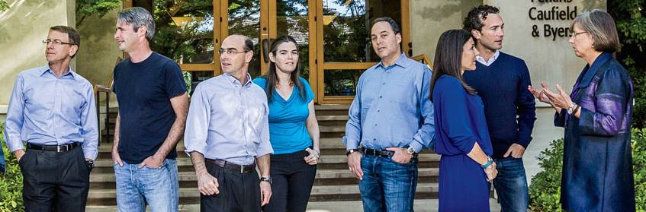
Kleiner Perkins Caufield & Byers (KPCB) promo photo via LinkedIn

Kleiner Perkins Caufield & Byers (KPCB) promo photo via LinkedIn

The blog This is Not a Pattern has an intriguing post entitled “Ways Men in Tech are Unintentionally Sexist.” The post draws attention to various unintended but meaningful ways that men in high technology, a notoriously male-dominated field, behave and speak in ways that normalize women’s exclusion and marginalization in this profession. This is particularly timely in the wake of Ellen Pao’s recent lawsuit for gender discrimination. The author sees several ways in which the culture of high technology subordinates women: language that perpetuates men as the default and women as outsiders; normative assumptions that tokenize women, emphasizing the (assumed or real) contrasts between them and men as the majority group; and perhaps most importantly, the tendency among workers to remain silent (and thus complicit) when sexist behaviors and gender discrimination occur.

While this article highlights important patterns that no doubt contribute to the myriad challenges women face in technology, I found this article particularly interesting because in many ways these innocuous behaviors are likely found in many male-dominated professions. Kris Paap’s ethnography of women working construction, for instance, provides extensive evidence of how men assume a gendered (male) worker in this field, and how that assumption shapes their language and interactions in ways that help maintain women’s underrepresentation in this field. Similarly, sociologists like Louise Roth and Jennifer Pierce have shown how women in finance and law, respectively, face cultural assumptions about their lack of qualifications, skill, and suitability for their professions.

Read More

SOURCE: Public Domain Pictures

Searching for that perfect Mother’s Day gift this year?  My suggestion is some reading material, all of which you can find here.  So go ahead and share this with loved ones this weekend.

Gift Idea #1:  Workplace Tips for Mom-to-Be

There’s the study “Professional Image Maintenance: How Women Navigate Pregnancy in the Workplace.” By Laura M. Little, Virginia Smith Major, Amanda S. Hinojosa, and Debra L. Nelson recently published in the Academy of Management Journal.

The authors were interested in understanding professional image maintenance at work. More specifically, they asked how employees sought to managing others’ perceptions of them, the better to maintain a viable professional image. In one of their three studies presented in the paper, they interviewed a sample of 35 mostly white, pregnant or recently pregnant working women employed in a range of jobs. The question they posed was this:  How does pregnancy affect working women’s professional experiences?

By and large, interviews revealed that pregnant women actively engage in “image maintenance.”  They actively attempt to manage others’ perceptions and reactions to their pregnancy in order to preserve the professional image they had before revealing their pregnancy.  Interviewees felt this image maintenance was necessary in order to avoid being stereotyped as “delicate” or “cute” or “irresponsible”—all of which have negative implications for their professional image and careers. Others cited the need to ensure that others did not see them as more likely to quit (which would have reduced their changes of winning good job assignments, promotions, etc.). How did these women do this?

Read More