Rachael’s post insightfully delves into the ways that The Help has served to motivate domestic workers to organize and push for better treatment, as well as the ways that the film reinforces racialized narratives and stereotypes. While the film and book are fictional stories based on historical material, sociological research on race, gender, and work provide more nuanced, accurate portrayals of the challenges, issues, and obstacles domestic workers encounter.
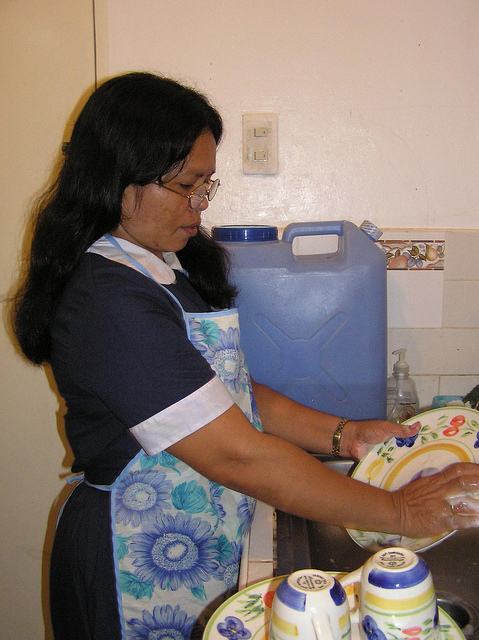
In a 2003 article published in the Annual Review of Sociology, sociologists Irene Browne and Joya Misra consider whether the literature on work and occupations provides support for the arguments made by intersectionality theorists. Specifically, inasmuch as an intersectional approach contends that issues of race, gender, class, and other categories are overlapping rather than singular and mutually exclusive, Browne and Misra examine whether key areas studied by researchers in the sociology of work show evidence of this overlap. As part of their analysis, Browne and Misra look at the literature on domestic workers to consider whether this indicates interactions of race, gender, and class. These authors note that the overwhelming preponderance of women of color–particularly immigrant women of color–in this profession signifies employers’ preference for certain workers to do this type of labor. Additionally, the low pay afforded to most domestic workers further signifies the ways that race, gender, class—and in this case, nationality—are intertwined.
Read More
 Work in Progress