Archive

Author Archives: Guest Contributor

by Mike Rose

A high school senior, Carlos is already a promising carpenter. He is volunteering at a Habitat for Humanity site, assembling the frames for the bedroom walls, the boards for one frame laid out neatly in front of him. He measures the distance between them. Measures again. Then he drives one nail, then another, stopping occasionally to check with his eye or a framing square the trueness of the frame. I ask Carlos about this precision. He says that when the frame is finished, “I know it’s going to be straight and well done.” He pauses and adds: “That’s the way I am.”

In the midst of this campaign season’s speeches about the economy and job creation, we should stop and think about the personal meaning of work and whether we are providing enough opportunities for young people to discover that meaning for themselves. This is especially true for the many members of the younger generation who are planning to enter the workforce right out of high school or after attending community college.


Read More

by Chenoa Flippen

Immigration from Latin America to the United States has surged in recent decades, and along with it the entry of immigrant women into the U.S. labor market. Understanding how immigrant Latinas are faring in the U.S. economy requires more than just adding women to models that were designed to explain the experiences of immigrant men. Instead, this understanding requires us to move beyond treating gender, legal status, and family structure as mere variables to be controlled for and to think more deeply about how the various constraints on women’s work interact with one another.

Drawing on original data on immigrant women residing in Durham, NC, one of the “new” destinations that has sprung up around the country in recent decades, I explore the determinants of whether or not immigrant Latinas work, and if so, how well they are able to maintain steady, full time employment. Results show that immigrant Latinas are highly concentrated in a handful of immigrant-dominated occupations, and there is little evidence that women with greater education or work experience are able to get better jobs.

Read More

Povertyby Rebecca Vallas

Across the country, legal services attorneys play a largely hidden but essential role as first responders to American poverty. The family facing foreclosure after falling behind on the mortgage when both Mom and Dad lost their jobs in the recession. The mother of three, fleeing domestic abuse, who desperately needs a protective order to keep herself and her children safe. The woman with stage four cancer and six months to live, who has been wrongfully denied Social Security and Medicare. Without legal services, they would have nowhere to turn.

Day in and day out, legal services attorneys fight for the rights of poor individuals and families, providing legal help to people who cannot afford an attorney. Access to representation is vitally important.  But as we commemorate the 50th anniversary of the War on Poverty, it’s time to renew the vision of legal services as antipoverty work.

Read More

glass_blogimage_june-20141by Christy Glass

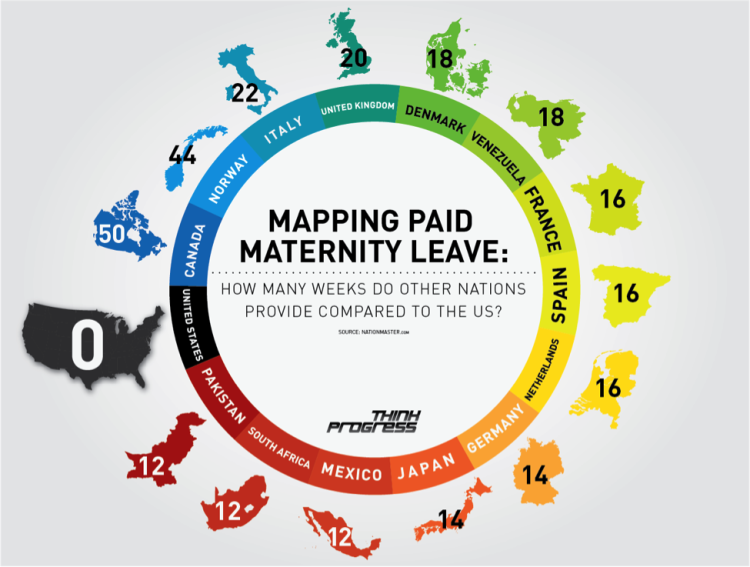
In a recent article published in Forbes (here), business writer Tim Worstall wonders why family-friendly policy advocates support paid maternity leave policies. In his view, such policies are not just ineffective but harmful to women because they damage women’s professional standing—and ultimately reduce their wages. Quoting a woman CEO who shares his views, Worstall argues that mothers should limit their time on paid leave or risk losing the confidence of their employer. So why on earth would anyone argue for more or better paid leave policies?

Read More

wage_theftby Corey Robin

Midterm elections are like fancy software: Experts love them, end-users couldn’t care less. But if the 2010 elections are any indication, we might not want to doze off as we head into the summer months before November. Midterm elections at the state level can have tremendous consequences, especially for low-wage workers. What you don’t know can hurt you — or them.

In 2010, the Republicans won control of the executive and legislative branches in 11 states (there are now more than 20 such states). Inspired by business groups like the American Legislative Exchange Council (ALEC), the U.S. Chamber of Commerce and the National Association of Manufacturers, they proceeded to rewrite the rules of work, passing legislation designed to enhance the position of employers at the expense of employees.

Read More

Car-manufacturing-featured

Credit: Chrysler Group (Creative Commons BY NC ND)

by William Lazonick and Tony Huzzard

In manufacturing plants all over the world, both managers and workers have discovered that when employees are involved in workplace decision-making, productivity rises. So in the United States, it made national news when in February workers at the Volkswagen auto plant in Chattanooga, Tennessee rejected representation by the United Automobile Workers (UAW) by a vote 712 to 626. Unfortunately, the Chattanooga workers said no to just the type of employee involvement in productivity improvement that will be necessary to sustain their jobs going forward. To compete on the world stage, a strong employee voice in the workplace matters.

Read More

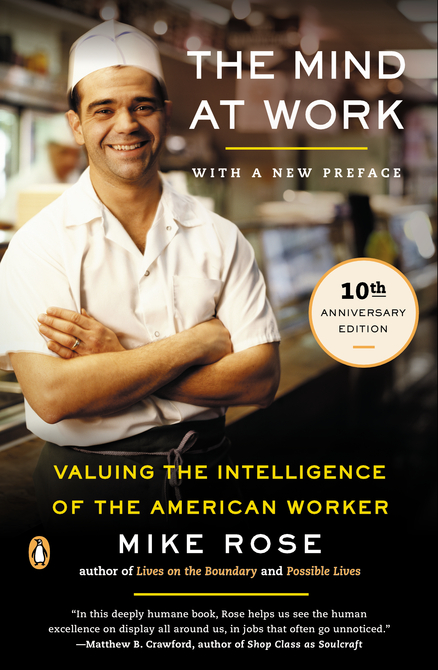
Mindatworkby Mike Rose

If that venerable debunker of inflated language, George Orwell, were alive today, he would gleefully be ripping into the lingo of the “new economy,” particularly taking aim at the gaseous hyperbole associated with digital technology.

To be sure, the last half-century has been a time of significant changes in the organization and technologies of work, and these changes have had huge consequences for workers. But the typical depictions of those changes misrepresent the complex nature of work and the workers who do it. The standard story line—found in political speech, opinion pages, and countless popular books on the new economy—is familiar to the readers of this blog.

Read More

Red-Light-District

Credit: kPluto (Creative Commons: BY-NC-SA 2.0)

by Anthony Marcus, Christopher Thomas and Amber Horning

Many recent public policy discussions about prostitution, especially underage prostitution, invoke disturbing narratives of hyper-violent, predatory pimps luring and coercing young girls into sex slavery. However, three recent studies of underage sex workers and pimps/market facilitators in New York and New Jersey call into question these assumptions. First, these public narratives overestimate the role of pimps in street sex markets; second, they overemphasize the impact of the initial recruitment stage on subsequent practices; and third, they mask or simplify the difficult and complex choices and contingencies faced by minors who sell sex. The studies find that there is in fact no prototypical pimp and relationships are more flexible, dynamic, and particular to the individuals involved than has been previously imagined.

Read More

By Deborah Hargreaves

LONDON — The issue of pay ratios has become the latest front in a worldwide debate about inequality and the widening gap between the top 1 percent and everyone else. In the United States, the financial reforms of the Dodd-Frank Act contained a provision that would force American companies to disclose the ratio of the compensation of their chief executive officer to the median compensation of their employees. Yet fierce criticism from the business sector has succeeded in delaying this measure for four years — and counting.

Now the European Commission in Brussels has weighed in, with a proposal currently under discussion that the European Union’s 10,000 listed companies reveal their pay ratios and allow shareholders to vote on whether they are appropriate. This has unleashed howls of protest against the European Union’s unpopular, unelected commissioners. Fund managers have called the plan weird, and business leaders have objected that shareholders don’t want such power.

Pay ratio proposals, in fact, have a venerable history. In his 1941 essay “The Lion and the Unicorn: Socialism and the English Genius,” George Orwell advocated a limitation of incomes so that the best-paid would earn no more than 10 times the lowest-paid. But this was controversial territory, even for Orwell. A few paragraphs on, he retreated and wrote: “In practice it is impossible that earnings should be limited quite as rigidly as I have suggested.”

Read More

Print

Jerry A. Jacobs.

2013.

In Defense of Disciplines: Interdisciplinarity and Specialization in the Research University.

Chicago, IL: University of Chicago Press.

Interdisciplinarity has become an increasingly powerful current in US universities and colleges. The virtues of promoting interaction among researchers from diverse fields and building bridges across academic units are taken for granted by many observers and university administrators. But the longer I investigated the matter, the more I became convinced that disciplines are an indispensable component of a dynamic university system. At the very least, any viable interdisciplinary arrangement will need to stand on a firm disciplinary foundation. A stronger version of the argument holds that interdisciplinary arrangements are much more specialized and transitional than most analysts have recognized.

Read More