Archive

Commentary

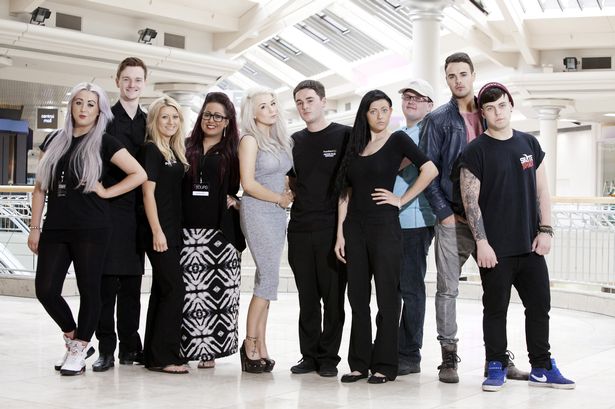
young good looking retail workers

It has become something of an orthodoxy on both sides of the Atlantic that job quality is polarising into good and bad jobs. A lot of attention in the US and UK is focused on making these bad jobs better. It is less well appreciated that good jobs can go bad and that bad jobs can get even worse. It might be that aesthetic labour contributes to the latter.

Much of the initial research into aesthetic labour has analysed retail jobs. Employment in retail constitutes what might be termed a ‘bad job’. Most jobs in retail are low skill and retail is one of the main low wage industries in the US and UK.

It seems that this bad job is getting worse however as retail companies seek to aestheticise their workforce, hiring employees who look good or sound right. Two developments have emerged as a consequence of this aestheticisation strategy by employers.

Read More

Screenshot_117This is the third post in a four part series. Start at the beginning with: Whimsical Branding Obscures Apple’s Troubled Supply Chain.

I cannot watch this 2003 Apple iPod commercial without shaking my hips, even in the midst of delivering a lecture or conference presentation. In fact, I struggle deeply to refrain from jumping around in an ecstatic dance of joy.


This commercial moves me. But, why?

Read More

It’s an old question, really, but an important one — are managerial practices and work design responsible for the behavior of employees? Or does worker engagement and behavior come down to individual personalities, with responsibility thus resting primarily with workers? And what are the impacts on a firm’s financial success?

These questions received newfound attention with the publication of a study conducted by the Gallup organization, based on deceptively interesting survey data. Interesting, because they mirror critical concepts we sociologists of work use in our research. Deceptive, because the report stands as a textbook example of the kind of shallow reasoning that results when analysts proceed without concepts such as power, organizational design, and the normative climate fostered by management.

The report, titled “State of the American Workplace:  Employee Engagement Insights for U.S. Business Leaders ” uses data collected from individuals and their employers to show that a variety of factors that Gallup terms “employee engagement” enhance productivity, profitability and customer ratings while reducing accidents, theft, absenteeism, turnover and defects.

Read More

Screenshot_41

This is the second post in a four part series. Start at the beginning with: Whimsical Branding Obscures Apple’s Troubled Supply Chain.

In a recent post on the Apple brand and its cultural significance, I drew on my study with Gabriela Hybel of over 200 Apple television commercials aired between 1984 and the present to argue that Apple excels at what branding experts refer to as “emotional branding.” I pointed out that Apple commercials cultivate happiness through whimsical depictions of products and their users. In this post I focus on another key finding from this research, which is the prominence of sentimentality in Apple commercials. Both of these things — whimsicality and sentimentality — are key parts of the promise that Apple makes to its customers.

Read More

As the debate sparked by the New York Times’ Sept. 8th 2013 piece on gender equity at Harvard Business School (HBS) continues, HBS teaching cases still get distributed to students, HBS class sessions continue to be meet on a regular basis, and HBS faculty members still review their teaching notes before stepping into “the pit” (i.e., the center of the classroom).

My ethnography of faculty socialization at HBS emphasizes the above recurring campus activities rather than gender dynamics on campus. But even recurring activities can take on a gendered flavor.

anteby-jacket

Read More

Flirt(1)

New research by management scholars on workplace flirting is getting quite a bit of media attention.  You might have rolled your eyes at the topic, thinking that nothing serious can be learned about the workplace by studying flirtatious women.

I disagree.

A study of flirting at work may reveal a lot about workplace gender inequality.  In fact, the behavior may be telling of underlying problems that are not “sexual” in content.

First, the study (read a summary of the study here).  The authors surveyed about 300 employed female attorneys in 38 Southeastern U.S. law firms.  Female attorneys reported on, among other things: their strategic flirting (engaging in socio-sexual behaviors with the intent of attaining a desirable outcome); daily mistreatment (the frequency with which they were treated rudely, excluded from a work activity, or as not-smart or inferior); and the femininity or masculinity of their law firm (the extent to which their firm could be characterized by terms such as “assertiveness, forcefulness, and masculinity” versus “compassion, and warmth”).

Read More

Cream

If it’s springtime in Paris, it has to be if not sex then at least summer in the city – New York City. Luckily the American Sociological Association held its annual conference in Manhattan this August. The theme was ‘Interrogating Inquality’. Playing to this theme Ashley Mears of Boston University had organised a panel session on the sociology of appearance.

Along with my colleague Dennis Nickson, I’d been asked to present on the ‘dark side’ of aesthetic labour – ‘lookism’. Lookism is discrimination on the grounds of appearance. Or as Ayto bluntly states, ‘uglies are done down and beautiful people get all the breaks’. According to Tietje and Cresap, the term was first used in print by the Washington Post in the late 1970s. For us the issue is inequalities in access to employment based on prescribed and proscribed looks. I finished reading through my presentation notes as my plane touched down in Newark. As it taxied to the apron, I found myself wondering, Carry Bradshaw style, if the uglies are being put down, who or what decides who is good looking or at least has the right look?

Read More

Flight attendants are not only friendly with their passengers, they’re also often super friendly with each other.  This may be because especially gregarious people go into the profession, but it’s also an adaptation to a surprising structural feature of their job. It turns out that, on any given flight anywhere in the world, most flight attendants are meeting their co-workers for the very first time.

There are about 100,000 flight attendants in the U.S. alone and they get their flights through a process of bidding, one month at a time, one month ahead.  Most really do “see the world,” as the old glamorized image of the intrepid stewardess suggests, instead of working the same route over and over again.  As a result, explains Drew Whitelegg in Working the Skies, they rarely run into the same flight attendant twice.

This means that flight attendants must get to know one another quickly once they get on board.  They need to do so to make food and beverage service efficient, to coordinate their actions in the tight galleys in which they work and, most importantly, so that they will trust one another if they are called upon to do what they are really there for: acting in an emergency, one that could theoretically happen within seconds of take-off.  There’s no time to lose. “[F]rom the moment they board the plane,” writes Whitelegg, “these workers — even if complete strangers — begin constructing bonds.”

Screenshot_1

Image credit: National Library of Australia

Their instant bonding is facilitated by their shared experiences and their “peculiar identity,” Whitelegg explains — few people understand their job and the airline industry deliberately misportays it — and also by a culture of confession.  The galley has its own rules to which new flight attendants are socialized.  So, even though the workers are always new, the workplace is predictable.  Whitlegg describes how galley conversations during downtime tend to be extremely, sometimes excruciatingly personal.  “The things you hear,” laughs Clare, a flight attendant for Continental, “I could write a book. The things you hear at 30,000 feet.”  It’s the odd combination of a habit of bonding and the anonymity of strangers.

So, if you have the pleasure of taking a flight, spend a few minutes watching the surprising coordination of strangers who seem like old friends, and take a moment to appreciate the amazing way these workers have adapted to their very peculiar position.

Lisa Wade is a professor of sociology at Occidental College. You can follow her on Twitter and Facebook.  This post was cross-posted at Sociological Images and The Huffington Post.
The Trouble with Apple

Suicide at Foxconn. Poisoned workersColluding to inflate the price of e-booksTax evasion (albeit, legal). Shady suppliers who can’t toe the line of labor or environmental laws in China. Apple’s reputation has taken a hit in recent years. Or, so it seems it should have. But, despite the fact that news reports on the company’s behavior and supplier relationships have been more negative than positive since 2012, Apple’s revenue has continued to climb and break records.

Read More

On April 24, 2013, the garment industry experienced the worst disaster on record when Rana Plaza in Dhaka, Bangladesh, collapsed killing 1,129 workers and injuring 2,500 more. In the few years preceding the collapse of Rana Plaza, hundreds had been killed in fires and other building collapses, leading activists to campaign for more brand name responsibility.

The Rana disaster finally resulted in over 70 companies, mostly European, signing the Accord on Fire and Building Safety in Bangladesh.

The Accord was rejected by most US companies as creating too much liability and involving special interests (i.e. unions), precisely two of its strengths according to labor rights experts. Instead US companies struck out on their own in July with the Bangladesh Worker Safety Initiative agreement (signed by 17 companies, led by Wal-Mart and the Gap).

Here we present a forum on these recent events with commentary from three sociologists who are experts on global apparel supply chains and the struggle over labor rights in factories in developing countries.

Jennifer Bair provides an in-depth examination of the differences between the Accord and the Wal-Mart/Gap agreement.

Jill Esbenshade argues that the Wal-Mart/Gap agreement is actually a step backward for labor rights.

Gay Seidman discusses the obstacles to improving basic factory health and safety conditions in developing countries in general, argues that government involvement is necessary for real change, and evaluates the recent announcement by the Obama administration that it is suspending trade privileges for Bangladesh due to concerns about labor rights violations and safety.