Archive

Commentary

Young-business-woman-having-work-conference-call-from-home-while-cooking-meal-in-kitchen

A new study published by researchers at North Carolina State University tackles the challenge of shopping for, preparing and sharing healthful family meals.  In “The Joy of Cooking?,” Sarah Bowen, Sinikka Elliott and Joslyn Brenton describe women in particular as struggling to enact cultural ideals associated with home-cooked meals.  Expensive ingredients, time pressures and picky eaters seem to conspire against them, with poor, working-class and middle-class mothers all feeling the pinch.

The study’s findings were hotly debated in recent weeks, with coverage and commentary in outlets such as Slate, PBS and The New York Times focusing almost exclusively on values and priorities.  Some praised the study for questioning the idealization of burdensome family dinners.  Others called for increased commitment to home-cooked family meals, citing the rewards of time spent together and noting how easy and rewarding meal preparation can be.

Because the debate’s participants have primarily viewed the issues through lenses of family and food rather than work, very little of the debate has broached the root causes of families’ mealtime struggles:  deteriorating employment opportunities, stagnant wages, and changing expectations of workers. Read More

Guysby Kristen Schilt

Recently the New Republic featured a story about how the workplace experiences of transgender men and women can shed light on occupational gender equality more broadly. Jessica Nordell interviewed me for the article, and we talked extensively about the research I did for my first book, Just One of the Guys, that focuses on the work lives of transgender men in Texas and California. I argue in the book that trans men can develop what Patricia Hill Collins calls an “outsider-within” perspective from the unique experience of having worked on both sides of the gender binary. This experience can put into high relief the often-invisible social processes that produce and maintain a workplace gender gap. As many of the men I interviewed noted, bringing their appearances in line with their feeling of maleness could bring a noticeable change in their workplace treatment – a change that one man described as going from “bossy” to “take charge.” However, white and heterosexual trans men reported more positive changes in their treatment from co-workers and employers than trans men of color and gay trans men.

Read More

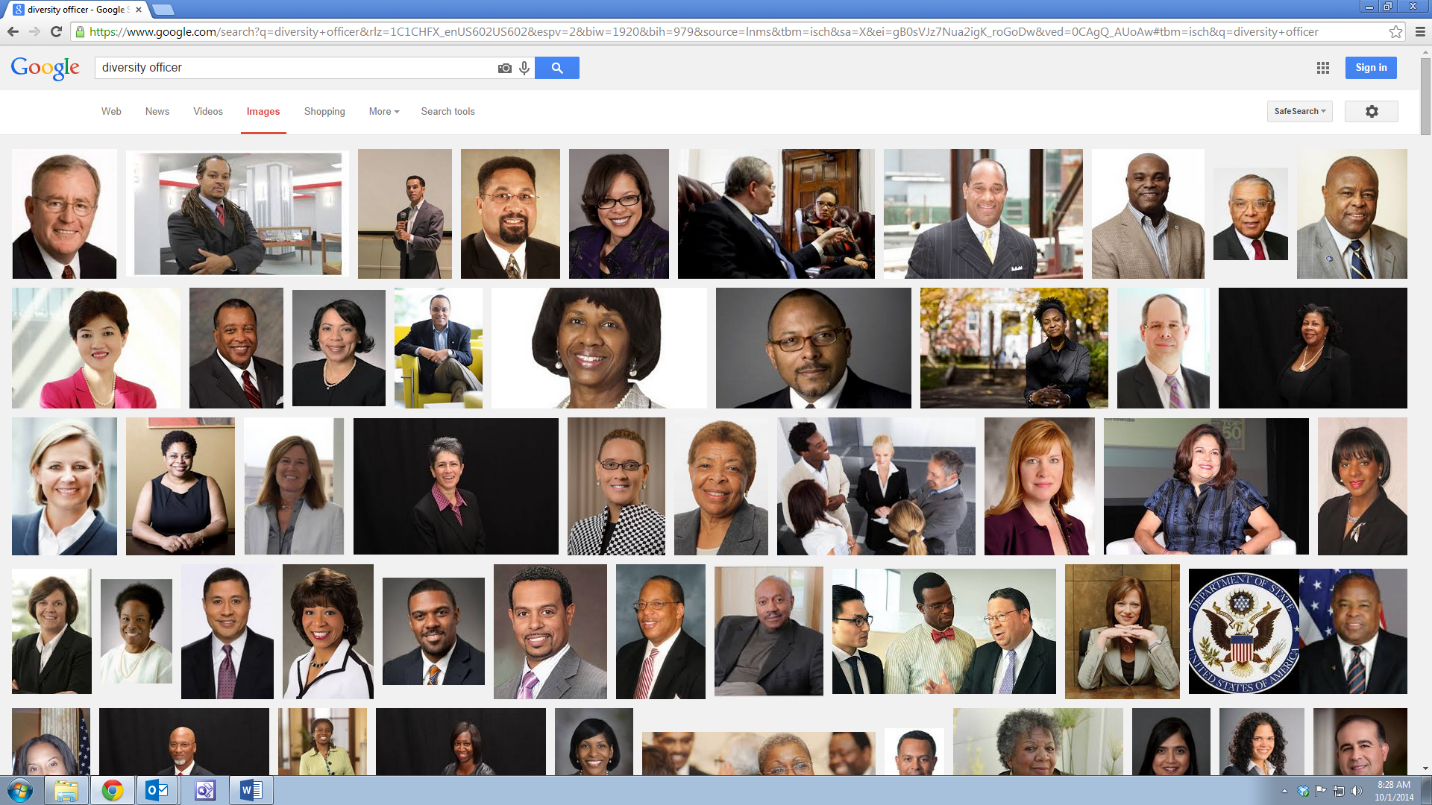
hrmgrIt is not surprising that work organizations want to become more socially diverse.  Google, whose workforce of 48,600 is 30% female and whose top-ranking managers are 8% female, just announced sweeping plans to improve diversity at the company. How can they successfully accomplish this given the challenges of recruiting and retaining a diverse workforce? And once they achieve a diverse work group, how can they handle the challenges of managing this diversity?

I recently came across two articles that draw on very different settings that help answer these two questions. The first was featured in a WSJ article, co-authored by management scholars David R. Heckman, Wei Yang, and Maw Der Foo. The second was co-authored by sociology PhD student, Brad R. Fulton and fellow sociologists, Ruth Braunstein and Richard L. Wood, in the journal American Sociological Review .

Read More

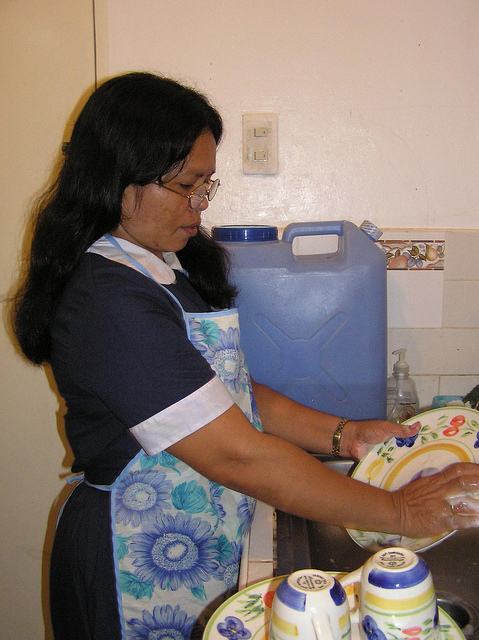
Domestic worker

Source: International Labour Organization

by Christelle Avril and Marie Cartier

Home-based service jobs have developed considerably across Western societies. In fact, chances are high that a working-class woman in France today will, at some point in her life, be a house cleaner, home-based childcare provider, or home aide for the elderly. Political, scholarly, and everyday discourses, saturated with the double prejudices of gender and class, treat all these home service occupations, which require little prior training, the same. In our article (here), we illuminate the variability of the forms of subordination experienced by women in these occupations in France.

Read More

Fear no more, fellow females and anybody interested in gender equality, research is supporting ‘optimism about a better world to come’. Thus tells us Tyler Cowen in the New York Times, and he is not talking about any old optimism but about that of John Stuart Mill, one of the great old thinkers of economics. So it’s gender equality optimism with an extra-dose of gravitas and academic credibility. In his NYT piece Cowen reviews two recent books that study gender inequality through an economics lens. According to these studies, women ‘are perceived as easier to take advantage of in … economic settings’ and ‘participate less in many public settings, especially those in which real power is exercised.’ But ‘once women achieve a critical mass in a particular area, their participation grows rapidly’, says Cowen. Read More

by Mike Rose

A high school senior, Carlos is already a promising carpenter. He is volunteering at a Habitat for Humanity site, assembling the frames for the bedroom walls, the boards for one frame laid out neatly in front of him. He measures the distance between them. Measures again. Then he drives one nail, then another, stopping occasionally to check with his eye or a framing square the trueness of the frame. I ask Carlos about this precision. He says that when the frame is finished, “I know it’s going to be straight and well done.” He pauses and adds: “That’s the way I am.”

In the midst of this campaign season’s speeches about the economy and job creation, we should stop and think about the personal meaning of work and whether we are providing enough opportunities for young people to discover that meaning for themselves. This is especially true for the many members of the younger generation who are planning to enter the workforce right out of high school or after attending community college.

Read More

Walmart workerBad jobs are usually defined as those with low pay, little autonomy, and few benefits. Add to the list irregular hours. As Steven Greenhouse describes in his New York Times article on the part-time labor force, workers today are suffering from erratic scheduling. In the service industry, employers routinely cut their hours or send them home early when customer traffic slows. On the flipside, workers are required to be on call or stay late during especially busy times. Erratic hours not only mean income insecurity, but also result in the inability to do anything else, like search for a second job or take a class.

Read More

ticking clocksAnyone who has worked a nonstandard, part-time job is familiar with the issues: uncertain hours, fluctuating pay and last-minute change. Add to that a more recent scheduling innovation increasingly common in retail work: on-call hours that require workers to set aside time they may be required to work, with no compensation for that time and no guarantee of hours or pay.

Variable schedules are particularly challenging for parents, who can find it difficult to arrange childcare, attend school events, and even maintain morning and bedtime routines. Fluctuating schedules can interfere with ability to attend school or hold down an additional job. Because pay varies with hours, workers may also have difficulty making ends meet.

In response to demands of women’s and labor groups, government officials are increasingly enacting or proposing legislation aiming to curtail practices that present the greatest challenges to employees. Many workers have gained the right to request predictable schedules (although laws currently do not require employers to honor their requests). Other proposals call for work schedules posted two weeks in advance, compensation for on-call status, and extra pay if workers are called in with less than 24-hours notice or are sent home after just a few hours of work.

Read More

by Chenoa Flippen

Immigration from Latin America to the United States has surged in recent decades, and along with it the entry of immigrant women into the U.S. labor market. Understanding how immigrant Latinas are faring in the U.S. economy requires more than just adding women to models that were designed to explain the experiences of immigrant men. Instead, this understanding requires us to move beyond treating gender, legal status, and family structure as mere variables to be controlled for and to think more deeply about how the various constraints on women’s work interact with one another.

Drawing on original data on immigrant women residing in Durham, NC, one of the “new” destinations that has sprung up around the country in recent decades, I explore the determinants of whether or not immigrant Latinas work, and if so, how well they are able to maintain steady, full time employment. Results show that immigrant Latinas are highly concentrated in a handful of immigrant-dominated occupations, and there is little evidence that women with greater education or work experience are able to get better jobs.

Read More

Povertyby Rebecca Vallas

Across the country, legal services attorneys play a largely hidden but essential role as first responders to American poverty. The family facing foreclosure after falling behind on the mortgage when both Mom and Dad lost their jobs in the recession. The mother of three, fleeing domestic abuse, who desperately needs a protective order to keep herself and her children safe. The woman with stage four cancer and six months to live, who has been wrongfully denied Social Security and Medicare. Without legal services, they would have nowhere to turn.

Day in and day out, legal services attorneys fight for the rights of poor individuals and families, providing legal help to people who cannot afford an attorney. Access to representation is vitally important.  But as we commemorate the 50th anniversary of the War on Poverty, it’s time to renew the vision of legal services as antipoverty work.

Read More