Archive

Research Findings

Image: Julie Jordan Scott via Flickr (CC BY 2.0)

Image: Julie Jordan Scott via Flickr (CC BY 2.0)

by Brian C. Thiede, Daniel T. Lichter, and Scott R. Sanders

Pundits and politicians in the U.S. frequently assume that poverty is the result of joblessness and idleness, and in contrast, upward social and economic mobility is possible for anyone given sufficient work effort. Such assumptions about work and poverty underpin many social policies. For example, minimum wages are largely designed to ensure that work is remunerated with a basic, presumably above-poverty standard of living. Stringent time limits and work requirements on many so-called safety net programs also presume that incentivizing work is an effective means of reducing poverty and public sector dependence.

In contrast to these assumptions, however, evidence suggests that a large share of the poor live in families which are attached to the formal workforce. Yet to date researchers have produced a rather limited set of empirical findings about the working poor. In our judgment, this knowledge gap has largely been due to inconsistent conceptualization and measurement of the working poor across studies. To address this gap, our research has examined the conceptual and normative assumptions behind different measurement choices for studying the working poor, and compared empirical estimates based on a range of measures.  Our findings demonstrate that working poverty is a widespread problem, but also show that estimates of the magnitude of the problem are sensitive to measurement choices.

Read More

Unite Here rally for BWI workers in Annapolis, MD. Image: United Workers via Flickr (CC BY 2.0)

Unite Here rally for BWI workers in Annapolis, MD. Image: United Workers via Flickr (CC BY 2.0)

by Barry Eidlin

In the 2016 presidential race, candidates from both major parties are looking for ways to address inequality.

Partly, they must do so because seven years after the 2008 crash, many Americans still aren’t getting ahead, according to several analyses by the Economic Policy Institute think tank. In fact, that’s nothing new. Factoring in inflation, wage growth has stagnated for the bottom 90% of Americans since 1979.

In the campaign ahead, these struggling Americans will be called many things: “forgotten,” “hardworking,” “ordinary,” “everyday,” and of course, “middle class.”

What they will not be called is “working class.” To the extent that anyone refers to the “working class,” it will be as a not-so-coded reference to white, male, blue-collar workers, even though the term can apply to people of both genders, and any race, in many different sorts of work.

This failure to talk about class obscures one of the primary drivers of the growth in income inequality: the decline of labor unions. Research I’ve been conducting on the intersection of political sociology, inequality and social policy suggests that union decline is linked to a political process that has pushed class issues off the table in the US – unlike Canada, where the income gap hasn’t widened nearly as much.

If the current crop of US presidential candidates really wants to address the growing inequality gap in America, getting class back on the agenda would be a good place to start.

Read More

Image: Paul Townsend via Flickr (CC BY-NC 2.0)

Image: Paul Townsend via Flickr (CC BY-NC 2.0)

by Devah Pager & David S. Pedulla

Discrimination in hiring continues to limit the opportunities available to racial minorities, with important consequences for their economic security and career trajectories. But, how do racial minorities respond to this reality when they are searching for employment? Some argue that job seekers tailor their searches in ways that allow them to avoid discrimination. Others suggest that job seekers adapt by casting a wider net in their search.

Until now, we have known little about this process, largely because no existing data source has closely followed individuals through their job search. In recent research, we attempt to address this limitation by drawing on two original datasets that track job seekers and the positions to which they apply. The results of our study point to three general conclusions about patterns of self-selection and job search:

1) Broader Job Search among African Americans than Whites: African Americans cast a wider net in their job search than similarly situated whites. Specifically, they include a greater range of occupation types and occupational characteristics among the jobs to which they apply. For example, consider one of our respondents whose last job was as a “material moving worker.” Over the course of the survey, this respondent applied for jobs consistent with his prior work experience, such as “material handler” and “warehouse worker.” However, the respondent also reported applying for jobs in retail sales, as an IT technician, a delivery driver, a security guard, a mailroom clerk, and a short order cook. This respondent applied to jobs in a total of seven distinct occupations over the course of the survey, reflecting a fairly broad approach to job search. While this is just one example, in both of the datasets we examined African Americans systematically applied to a larger number of distinct job types than whites with similar levels of education and work experience.

2) Narrower Job Search among Women than Men: Our study demonstrates that the search strategy of African Americans appears very different from that of women. Women self-select into distinctive (and highly gendered) occupational categories, considering a narrower range of occupational types and characteristics over the course of their job search relative to similarly situated men.

3) Labor Market Discrimination Appears to Drive Search Behavior: We find that perceptions of or experiences with racial discrimination play an important role in explaining the greater search breadth exhibited by African American job seekers. Individuals who have witnessed or experienced racial discrimination in the workplace are more likely to cast a wide net in their job search relative to those without such experience.

Read More

The workstation of the future in “Big Hero 6” (2014) Image: DisneyLifestylers via Flickr (CC BY 2.0)

The workstation of the future in “Big Hero 6” (2014)
Image: DisneyLifestylers via Flickr (CC BY 2.0)

by William Attwood-Charles and Juliet B. Schor

The image of the U.S. worker and U.S. workplace is in the midst of a transformation. Stable, full-time employment is increasingly scarce and many firms are organizing work around projects rather than fixed tasks or competencies. Workers, particularly in knowledge intensive industries, are expected to self-manage and collaborate as teams, a dramatic shift from Fordist and Taylorist systems that emphasized direct supervision, simplification, and standardization as techniques for coordinating production. Thus, while the dominant image of the U.S. worker in the 1950s might have been the industrial laborer, arguably the new face of U.S. industry is that of the “maker.”

Urban Dictionary (always on the forefront of linguistic innovation), defines makers as “those who love to create things in their spare time (often electronic, often with their own hands). Also called Hobbyists.” These passionate, multi-skilled tinkerers are offered in exuberant think pieces (here, here and here) as the engine of the New Economy. Indeed, the Maker is arguably having a cultural moment with Disney’s release of its animated movie, Big Hero 6, which features a group of tech-enabled wunderkinds fighting a scorned research professor.

Putting aside the fashionable aspect of the maker movement, it fits squarely within a trend over the last four decades to flatten hierarchies and promote open and egalitarian workplace arrangements. To understand how the architects of leveling hope to achieve these goals, it is first useful to examine what the leveled workplace is situated against; namely, the conventional hierarchical and bureaucratic world of work. In doing so, we can have a better idea of how hierarchies are produced in ostensibly leveled environments, as well as the meaning of status hierarchies in domains where they should be absent.

Read More

Image: Juliet Schor

Image: Juliet Schor

by Juliet B. Schor and William Attwood-Charles

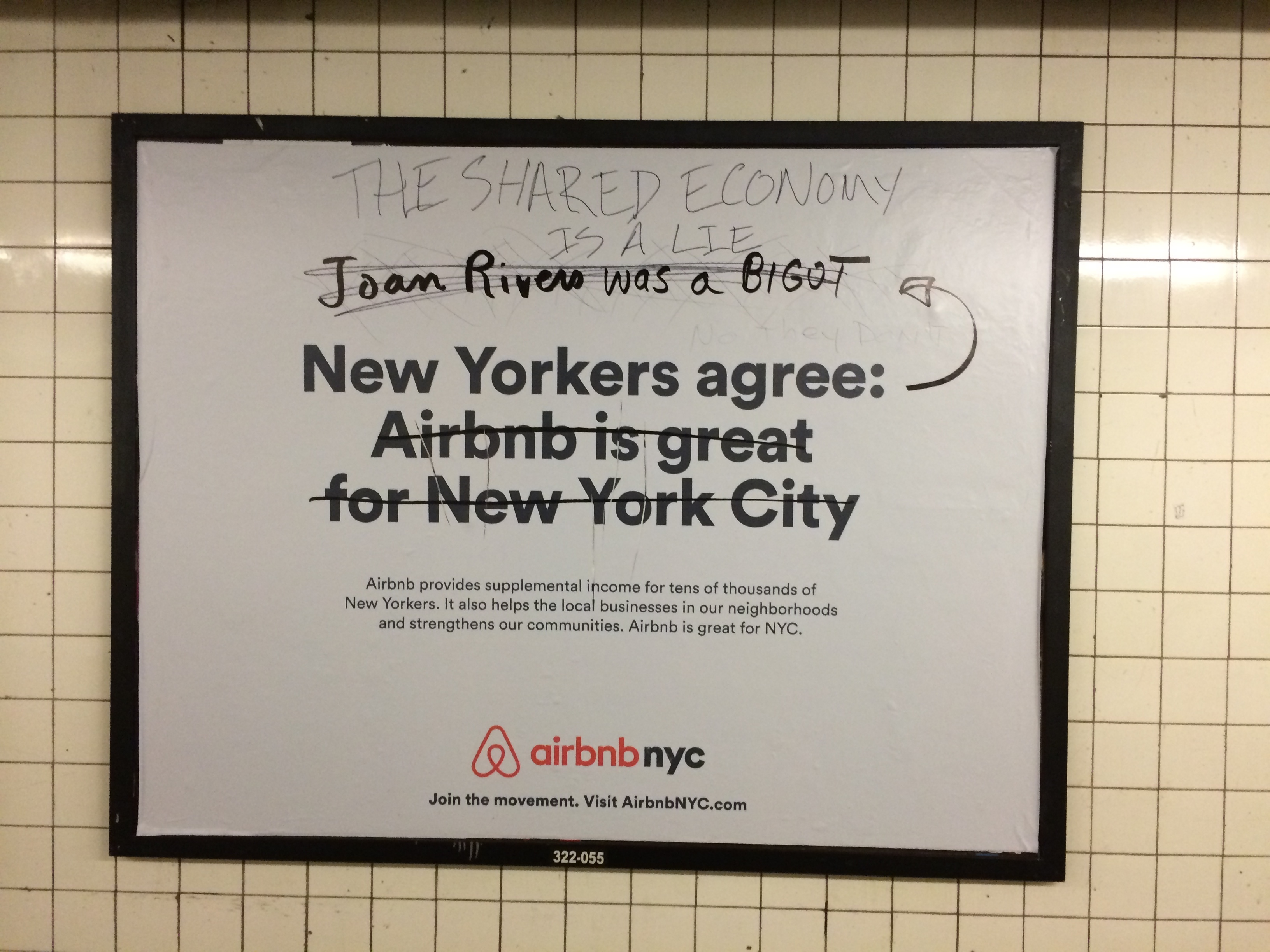
If one had any doubt that the “sharing economy” has become a real thing, the 2016 Presidential campaign should lay them to rest. In July Jeb Bush announced he would be using Uber on the campaign trail to show that that the “free market” can create jobs. Hillary Clinton, in her first major speech on economics, criticized gig economy platforms for failing to provide benefits.

For sociologists, these digital platforms are interesting because they are creating markets that connect people in new ways. The most important of these is Peer-to-Peer (P2P) exchange. The term comes from the open source software movement, and refers to open access communities of collaborating individuals. P2P exchanges occur between individuals, rather than a standard Business-to-Consumer or Professional-to-Consumer transaction. This is less true of Uber, where many drivers were already full-time drivers, including taxi drivers, than it is of Airbnb, a P2P lodging site, or Relay Rides, a P2P car rental site. On labor sites, such as Task Rabbit, Peers sell labor services to people who are looking for help in their home or business.

The promise of P2P platforms is that they create new economic opportunities for people to earn, in ways they can control themselves. This has proved appealing for many, especially in the aftermath of the 2008 financial crisis, the period when many of these sites were being launched. Potential downsides include the possibility that the platforms are accelerating a race to the bottom in labor markets, and that they represent a new frontier in the encroachment of the market into daily life.

With a team of PhD students from Boston College and Boston University we have been studying both non- and for-profit P2P platforms, including the three named above (Airbnb, Relay Rides and Task Rabbit). We began studying “providers” on these sites in 2013, and have done approximately 50 interviews, the majority in Boston. Demographically, the salient features of our sample are their youth, high education levels, and whiteness, which are all characteristics of platform participation throughout the country. Although such a small sample does not allow us to definitively answer many of the questions swirling around these platforms, we do have a number of suggestive findings.

Read More

Image: May S. Young via Flickr (CC BY 2.0)

Image: May S. Young via Flickr (CC BY 2.0)

By Sean Waite and Nicole Denier

Over the last two decades there has been a growing interest in the labor market outcomes of gay men and lesbians. It has long been acknowledged that labor markets are stratified along multiple dimensions, such as gender, race and nativity. More recently new data has shed light on how labor market opportunities and rewards may also differ by sexual orientation. So far research has generally found that gay men earn less than straight men and lesbians earn more than straight women (in our work we show that this still means earning less than all men).

In most cases wage differences cannot be explained by differences in individual characteristics or choices, like weeks and hours worked, socio-demographic factors, education, and occupation or industry of employment. Researchers often interpret any wage gap that remains after accounting for these characteristics as discrimination. In other words, it is argued that employers and customers have a preference working with or doing business with straight men, rather than gay men. The wage advantage for lesbians relative to straight women is commonly interpreted as positive discrimination, i.e. since lesbians are less likely to be married and have fewer children, employers perceive them as more committed and less encumbered by family responsibilities than straight women. Taken another way, lesbians may experience less discrimination than straight women because they are perceived to be less encumbered by family and childcare responsibilities. But research so far has been limited by two big things. First, many data collection agencies don’t ask about sexual orientation in surveys (a great summary of this issue can be found on the Family Inequality blog), and if/when they do, it is often not asked in the context of questions about work situation. Second, research often focuses on one particular source of pay differences at a time, making it hard to evaluate the major factors driving wage inequality for gay men and lesbians.

Using Canadian Census data, we explore how various mechanisms contribute to wage gaps between gay men and straight men and lesbians and straight women, focusing on areas that researchers have identified as key determinants of how much people earn, including a 1) education and weeks/hours worked, 2) occupation and industry of employment, 3) sector of employment, and 4) family situation.

Read More

Image: 401kcalculator.org via Flickr (CC BY-SA 2.0)

Image: 401kcalculator.org via Flickr (CC BY-SA 2.0)

by Adam Goldstein and Neil Fligstein

The resurgence of finance over the past three decades represents one of the most remarkable trends in the recent history of capitalism. “Financialization” has become a common byword to describe the growing role of financial markets, motives, actors, and institutions in the operation of the overall economy.

One aspect of financialization that has received less attention is the role of households. As the financial industry has expanded, it has done so in large part by marketing more products to households, such as mortgages, second mortgages, mutual funds, stock trading accounts, student loans, car loans, and various forms of retirement products. But how have households themselves changed their attitudes and behavior in relation to financial markets? Should we view their primary role as that of consumers who supply the raw inputs for Wall Street’s machinations?  Or have households also started to think about their own economic activity in more financial terms? What is the scope of popular financialization?

To answer these questions we examined eighteen years of survey data from the U.S. Federal Reserve Board’s Survey of Consumer Finances. We charted changes in the financial activities and attitudes of U.S. households from 1989 to the onset of the financial crisis in 2007. Our goal was to provide a global view of the various ways that households at different points in the income distribution have become more involved with the financial economy, and how this has coevolved with their attitudes towards risk and debt.

The patterns are revealing: In terms of financial consumption, we find secular growth in the use of all kinds of financial products across the socio-economic structure. This implies that financial firms sought out customers for their products and made them available to people up and down the income distribution.

Read More

Image: Lendingmemo via Flickr (CC BY 2.0)

Image: Lendingmemo via Flickr (CC BY 2.0)

by Michael Kumhof

The United States have experienced two major economic crises during the last century, starting in 1929 and 2008. In each case the pre-crisis decades were characterized by a sharp increase in income inequality, and by a similarly sharp increase in household debt leverage. In new research, we propose a theoretical mechanism that links growing income inequality to growing debt leverage, and ultimately to financial fragility and financial crises. We find that this mechanism can account for around three quarters of the 1983-2008 increase in the U.S. debt-to-income ratio, and therefore for the increased probability of a financial crisis such as the one observed in 2008.

Read More

Since 1980 there has been a vast expansion of the economic power and centrality of financial service sector. Less well known is the simultaneous shift in the investment strategies of non-financial firms, at least in the US, toward investing in financial instruments of various sorts. By the early 2000s financial investments had risen to almost 30 percent of total assets in the U.S. private sector. In our on-going research we have tried to figure out if this shift in corporate investment strategies has been economically destructive. Our answer is that it has and that economic growth and U.S. standards of living have suffered as a result.

We already know that the concentration of wealth and power in the financial service industry has introduced fragility into the world economy, reduced both fixed investment and R&D, and increased inequality in the advanced economies. Instability, sector shifts and inequality are not, however, evidence that financialization has been harmful to general economic growth. In a capitalist system shocks, sectoral shifts and cyclic destruction, even rising inequality are not inconsistent with long run growth in standards of living.

It is possible that financial investment strategies, despite increasing inequality, lifted all boats. If this is what happened then the policy case against financialization is weakened considerably. On the other hand, if financialization of the non-finance sector is associated with decreased total production then contemporary movements toward a financialized non-finance sector are economically as well as socially destructive.

Prior to 1980 firms like GE and GM used debt financing of their products to support growth in market share. During this period we find that financial investments by non-finance firms were much lower  and encouraged economic growth..

After 1980 many non-financial firms moved in more speculative directions, into stock, credit, currency and even derivative markets. After 1980 we find that financial investment strategies by non-financial corporations are associated with reductions in value added, as Figure 2 shows. We estimate that since 1980 financial investments on Main Street stripped the US economy of at least 3.9 percent of aggregate growth, or about three years of lost growth in GNP. For comparison sakes, the great recession of 2008 produced aggregate negative growth of 2.9 percent.

Read More

Image: Koivth via Wikimedia Commons (CC BY 2.5)

Image: Koivth via Wikimedia Commons (CC BY 2.5)

by Jessica Looze, Aleta Sprague, and Jody Heymann

Over the past half century, the number of women in the workforce and their earnings rose markedly—not just in the United States, but worldwide. Yet in recent years, this progress has stagnated, and we’re still far short of gender parity in the economy. This is in large part because many workplaces continue to operate as if employees have no caregiving responsibilities. The global increase in women in the labor market hasn’t coincided with an equivalent rise in men’s share of caregiving. And in too many countries, laws and policies aren’t helping.

Indeed, the gender wage gap is largely a motherhood gap: unmarried women without children earn 95 cents on a man’s dollar, but for married mothers with at least one child under age 18, this figure drops to 76 cents. The gender gap at work is fueled by a gender gap at home. Women continue to spend more time doing carework than men, which is not simply a reflection of personal preferences: gender disparities in caregiving are embedded in, and perpetuated by countries’ laws, and policies. The consequences for the financial well-being of women and their families can be enormous.

To assess countries’ progress toward promoting gender equality in the economy and in caregiving, the WORLD Policy Analysis Center (WORLD) at the UCLA Fielding School of Public Health, together with our colleagues at the Maternal and Child Health Equity (MACHEquity) research program, recently released new globally comparative data and analyses on laws and policies affecting work and caregiving across all 193 UN member states. We examined the availability of leave following the birth of a child, for children’s health and education needs, as well as leave for the health needs of adult family members. The data show that while globally, countries are making some progress in promoting gender equality for workers with infant children, many countries still have a ways to go. Moreover, compared to infant caregiving, countries have made far less progress toward promoting gender equality when it comes to providing care for children beyond infancy or for elderly parents.

Read More