
Archive

Tag Archives: Inequality

Which_way_homeby Herbert J. Gans

The United States, like other modern economies, is experiencing a new and possibly long-lasting era of rising economic inequality, which may result in further political and class inequality. Consequently, sociologists should be asking themselves what roles they and their discipline can play in understanding these inequalities, particularly the societal changes and social costs they are likely to bring.

However, the discipline as a whole also needs to become more relevant to the country, and thereby also make itself more visible and valued. Although the current rise in inequalities is global, the differences in national political economies, and in national sociologies suggest that every country must find its own answers – as long as global implications and consequences are also considered. What follows is my attempt to suggest a more detailed scenario, or a vision of where American sociology should be headed.
Read More

glass_blogimage_june-20141by Christy Glass

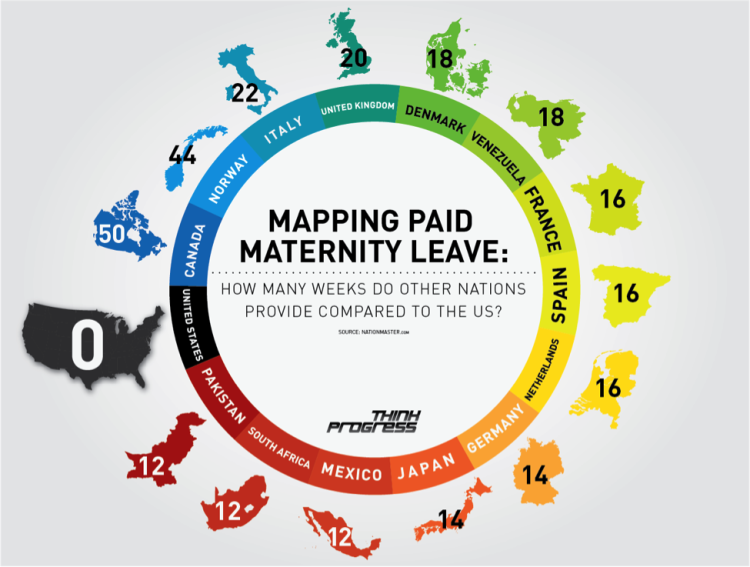
In a recent article published in Forbes (here), business writer Tim Worstall wonders why family-friendly policy advocates support paid maternity leave policies. In his view, such policies are not just ineffective but harmful to women because they damage women’s professional standing—and ultimately reduce their wages. Quoting a woman CEO who shares his views, Worstall argues that mothers should limit their time on paid leave or risk losing the confidence of their employer. So why on earth would anyone argue for more or better paid leave policies?

Read More

Scientific objectivity and the cool assessment of facts are the hallmarks of the science, technology, engineering, and math (STEM) disciplines. So, of course, stereotypes have no place in these research labs and university departments. Or so you might think. But, when evaluating identical resumes, scientists may be significantly less likely to agree to mentor, offer jobs, or recommend equal salaries to a candidate if the name at the top of the resume is Jennifer, rather than John.

Read More

Flirt(1)

New research by management scholars on workplace flirting is getting quite a bit of media attention.  You might have rolled your eyes at the topic, thinking that nothing serious can be learned about the workplace by studying flirtatious women.

I disagree.

A study of flirting at work may reveal a lot about workplace gender inequality.  In fact, the behavior may be telling of underlying problems that are not “sexual” in content.

First, the study (read a summary of the study here).  The authors surveyed about 300 employed female attorneys in 38 Southeastern U.S. law firms.  Female attorneys reported on, among other things: their strategic flirting (engaging in socio-sexual behaviors with the intent of attaining a desirable outcome); daily mistreatment (the frequency with which they were treated rudely, excluded from a work activity, or as not-smart or inferior); and the femininity or masculinity of their law firm (the extent to which their firm could be characterized by terms such as “assertiveness, forcefulness, and masculinity” versus “compassion, and warmth”).

Read More

David Spencer points to financialized capitalism as the new game in town. He suggests that capital has pursued financial investment strategies, increasing the flexibility of capital, reducing the bargaining power of labor and severing the relationship between production and profit. The latter reduces investment in the real economy, further undermining the need for labor. Spencer is writing from the point of view of the UK, but his basic analysis is consistent with the US experience.  Jerry Davis has made an even broader argument for the US, not only has the financial principle replaced production in the strategies of firms and the financial service industry but has become an ascendant value in households and the state. 

Ken-Hou Lin and I have been studying financialization’s links to US corporate behavior and think that the analysis of financialization requires recognizing more than two actors – capital and labor. There are varieties of “capital” actors in this game — financial service firms, short-term investors, long-term investors (e.g. pension funds), non-finance big corporations, and main street. There are also varieties of “labor” in our financialized capitalist system – workers, professional-managerial workers, executives and CEOs, and investment brokers.  (And then there is the state, where the rules are written, which displays its own heterogeneity beyond the scope of our emerging expertise.) Where you sit in the system determines whether your power has grown of been undermined by financialization.


Read More

Documenting Desegregation

Over the last few months, in various parts of the country, several scholars have been invited to critique and discuss fellow OOW members Kevin Stainback and Don Tomaskovic-Devey’s new book, Documenting Desegregation: Racial and Gender Segregation in Private-Sector Employment Since the Civil Rights Act. New York: Russell Sage Foundation, 2012. 

This panel brings together a few of these scholars’ voices in an attempt to kick start a conversation about occupational sex and race segregation and, in many cases to move forward with more research. 

You will want to read OOW member and Work in Progress blog editorial board member Steve Vallas’ summary below.

The book is the first major study use EEO-1 data to examine the nature and consequences of the 1964 Civil Rights Act (CRA) over time. The book is painstaking in its use of data, but also careful and creative in its application of theory (largely, social closure theory). Major findings emerge in the book, some of which confirm existing assumptions about corporate policy, and others that are highly counter-intuitive. The book has generated much debate in the few months since its publication, and seems destined to provide a touchstone in this field now and for the foreseeable future.

Read More

Total national income can be divided into two halves: the wage share and the profit share. As sociologist Tali Kristal showed in a 2010 article in American Sociological Review, the wage share of national income has declined since the 1980s in the Anglo-Saxon countries, Continental Europe, and even Scandinavia. On average across 16 OECD countries, “labor’s share declined by almost 9 percentage points since the early 1980s, from 73 percent in 1980 to 64 percent in 2005.”

Sophisticated statistical research by heterodox macroeconomists – those who work outside of the mainstream based on theories developed by Marx, Keynes and Polish macroeconomist Michael Kalecki – has found that declining wage shares lead to lower GDP growth. In other words, if more national income was shifted from profits to wages, GDP growth would improve.

Where such a relationship holds true, growth is said to be “wage-led” – reducing the wage share generates slower growth; increasing the wage share would improve growth. If a reduction in the wage share did not result in reduced growth, then growth is “profit led,” meaning that investment demand offsets any decline associated with the reduced wage share.

A new report for the International Labor Organization has now shown that the G20 countries – which account for 80% of Gross World Product – as a whole are wage-led. In short, planet earth is wage-led.

In this post I briefly elaborate how these findings relate to the sociology of work before turning to explain the Kaleckian macro models in a bit more detail.

Read More

Males retain lion’s share of power and prestige in post-recession economy.

by Inga Kiderra

(This article was originally published on the UC San Diego News Center. The original version can be read here.)

It’s March 2013 – 50 years after Betty Friedan’s explosive book launched feminism’s “second wave,” 41 after Title IX, the equal-opportunity amendment banning sex discrimination in education, was signed into law – and some exceptionally successful women are making a lot of news. Former U.S. Secretary of State Hillary Clinton is riding high in public opinion, winning straw polls for the 2016 presidency. Yahoo CEO Marissa Mayer, after shrugging off maternity leave, has sparked the “Great Telecommuting Debate” with a company-wide ban on working from home. And Sheryl Sandberg, Facebook’s chief operating officer, is on the cover of TIME and every other national stage, it seems, talking about “Lean In,” her just-published memoir and “sort of feminist” manifesto on succeeding as a female in corporate America.

The very presence of these women would seem to contradict the need for a national dialogue on women in the workplace that Sandberg is urging. Except that it doesn’t. These women are rare exceptions – according to a report from the Center for Research on Gender in the Professions at the University of California, San Diego.

The report details ongoing inequalities in the American labor market on the basis of gender.

Read More

The Rise of the Permanent Temp Economy

By Erin Hatton

(This article was originally published in the New York Times. The original version can be read here: http://opinionator.blogs.nytimes.com/2013/01/26/the-rise-of-the-permanent-temp-economy/?emc=eta1)

Kelly girl

Politicians across the political spectrum herald “job creation,” but frightfully few of them talk about what kinds of jobs are being created. Yet this clearly matters: According to the Census Bureau, one-third of adults who live in poverty are working but do not earn enough to support themselves and their families.

A quarter of jobs in America pay below the federal poverty line for a family of four ($23,050). Not only are many jobs low-wage, they are also temporary and insecure. Over the last three years, the temp industry added more jobs in the United States than any other, according to the American Staffing Association, the trade group representing temp recruitment agencies, outsourcing specialists and the like.

Low-wage, temporary jobs have become so widespread that they threaten to become the norm. But for some reason this isn’t causing a scandal. At least in the business press, we are more likely to hear plaudits for “lean and mean” companies than angst about the changing nature of work for ordinary Americans.

Read More

In this holiday season, we hear a lot about what people want.

Most kids and many adults want presents of various sorts.  Other people may want to lose weight, eat healthier, or exercise more in the new year.

All this attention to what people want reminds me that I want something too.  I would like scholars who study work, occupations, and organizations, to spend more time collecting and analyzing what people want from their jobs (i.e., studying work-related preferences). Read More