
Archive

Author Archives: Guest Contributor

Tower_of_London_viewed_from_the_River_Thames

Image: Tower of London by Bob Collowân, via Wikimedia Commons (CC-BY-SA-3.0)

[Ed note: This is the third of six articles in a virtual panel on Who should benefit from organizational research?]

by Nancy DiTomaso

At a time when there is a growing movement for “evidence-based” recommendations from research in the social sciences, medicine, and the policy arena among other domains, it seems strange for an article meant to raise critical issues about the state of the field to call for more focus on “truth.” While there is always room for better theory and better methods, as well as more clarity in writing, we need to be careful what we label as truth, and we need to safeguard the institutional procedures by which we determine what we think of as quality in scholarship.

Truth has never been objective, because it is always tied up with perspective and embedded in relationships of power, status, and numbers (as in numbers of people in the majority, not in terms of mathematics). Although there is nothing new about having those in power attempting to use their resources to define what is considered to be true, the current political environment, where there are such deep divides over not only interpretations of truth, but even of basic facts, should underline for us how difficult it is to use truth as a guideline for determining quality in our research. Indeed, a case can be made for the origins of science being the effort to break free from the strictures of power-bound definitions of truth. As such, the procedures that have been built up over time for the evaluation of contributions to science (social as well as physical), however flawed and imperfectly implemented, have grown out of the difficulties of determining what is good science, and indeed, what is therefore, true.

Read More

IvoryTower[Ed note: This is the second of six articles in a virtual panel on Who should benefit from organizational research?]

by Stephen Ackroyd

The question who should benefit from academic organisational research is probably best answered by the single word: everyone. But it is a silly question, because almost nobody actually does benefit from it. In Britain industrial and organisational sociology, as this area of study was originally conceived, has not developed an appropriate institutional position through which it could benefit anyone – except, of course, the academics themselves. Today any organisational research that is useful is done by managers and practitioners themselves and often also by consultants.

The research done by academics has almost no use at all. For reasons that have most to do with their complacency and lack of value commitment, academics studying organisations in the UK have largely failed to develop an institutional location from which they could be helpful to others.

Read More

Image: Juliet Schor

Image: Juliet Schor

by Juliet B. Schor and William Attwood-Charles

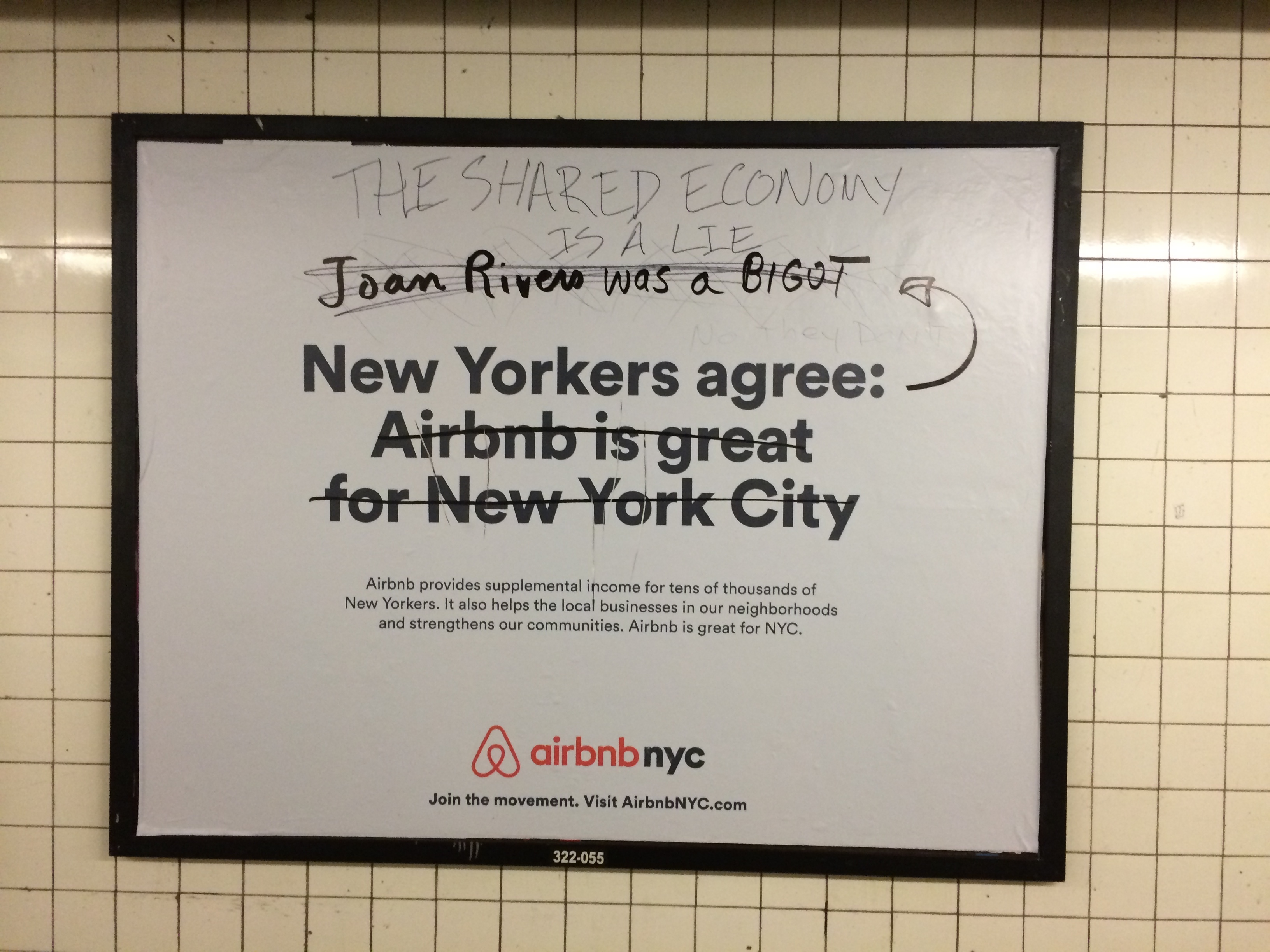
If one had any doubt that the “sharing economy” has become a real thing, the 2016 Presidential campaign should lay them to rest. In July Jeb Bush announced he would be using Uber on the campaign trail to show that that the “free market” can create jobs. Hillary Clinton, in her first major speech on economics, criticized gig economy platforms for failing to provide benefits.

For sociologists, these digital platforms are interesting because they are creating markets that connect people in new ways. The most important of these is Peer-to-Peer (P2P) exchange. The term comes from the open source software movement, and refers to open access communities of collaborating individuals. P2P exchanges occur between individuals, rather than a standard Business-to-Consumer or Professional-to-Consumer transaction. This is less true of Uber, where many drivers were already full-time drivers, including taxi drivers, than it is of Airbnb, a P2P lodging site, or Relay Rides, a P2P car rental site. On labor sites, such as Task Rabbit, Peers sell labor services to people who are looking for help in their home or business.

The promise of P2P platforms is that they create new economic opportunities for people to earn, in ways they can control themselves. This has proved appealing for many, especially in the aftermath of the 2008 financial crisis, the period when many of these sites were being launched. Potential downsides include the possibility that the platforms are accelerating a race to the bottom in labor markets, and that they represent a new frontier in the encroachment of the market into daily life.

With a team of PhD students from Boston College and Boston University we have been studying both non- and for-profit P2P platforms, including the three named above (Airbnb, Relay Rides and Task Rabbit). We began studying “providers” on these sites in 2013, and have done approximately 50 interviews, the majority in Boston. Demographically, the salient features of our sample are their youth, high education levels, and whiteness, which are all characteristics of platform participation throughout the country. Although such a small sample does not allow us to definitively answer many of the questions swirling around these platforms, we do have a number of suggestive findings.

Read More

Image: May S. Young via Flickr (CC BY 2.0)

Image: May S. Young via Flickr (CC BY 2.0)

By Sean Waite and Nicole Denier

Over the last two decades there has been a growing interest in the labor market outcomes of gay men and lesbians. It has long been acknowledged that labor markets are stratified along multiple dimensions, such as gender, race and nativity. More recently new data has shed light on how labor market opportunities and rewards may also differ by sexual orientation. So far research has generally found that gay men earn less than straight men and lesbians earn more than straight women (in our work we show that this still means earning less than all men).

In most cases wage differences cannot be explained by differences in individual characteristics or choices, like weeks and hours worked, socio-demographic factors, education, and occupation or industry of employment. Researchers often interpret any wage gap that remains after accounting for these characteristics as discrimination. In other words, it is argued that employers and customers have a preference working with or doing business with straight men, rather than gay men. The wage advantage for lesbians relative to straight women is commonly interpreted as positive discrimination, i.e. since lesbians are less likely to be married and have fewer children, employers perceive them as more committed and less encumbered by family responsibilities than straight women. Taken another way, lesbians may experience less discrimination than straight women because they are perceived to be less encumbered by family and childcare responsibilities. But research so far has been limited by two big things. First, many data collection agencies don’t ask about sexual orientation in surveys (a great summary of this issue can be found on the Family Inequality blog), and if/when they do, it is often not asked in the context of questions about work situation. Second, research often focuses on one particular source of pay differences at a time, making it hard to evaluate the major factors driving wage inequality for gay men and lesbians.

Using Canadian Census data, we explore how various mechanisms contribute to wage gaps between gay men and straight men and lesbians and straight women, focusing on areas that researchers have identified as key determinants of how much people earn, including a 1) education and weeks/hours worked, 2) occupation and industry of employment, 3) sector of employment, and 4) family situation.

Read More

Image: 401kcalculator.org via Flickr (CC BY-SA 2.0)

Image: 401kcalculator.org via Flickr (CC BY-SA 2.0)

by Adam Goldstein and Neil Fligstein

The resurgence of finance over the past three decades represents one of the most remarkable trends in the recent history of capitalism. “Financialization” has become a common byword to describe the growing role of financial markets, motives, actors, and institutions in the operation of the overall economy.

One aspect of financialization that has received less attention is the role of households. As the financial industry has expanded, it has done so in large part by marketing more products to households, such as mortgages, second mortgages, mutual funds, stock trading accounts, student loans, car loans, and various forms of retirement products. But how have households themselves changed their attitudes and behavior in relation to financial markets? Should we view their primary role as that of consumers who supply the raw inputs for Wall Street’s machinations?  Or have households also started to think about their own economic activity in more financial terms? What is the scope of popular financialization?

To answer these questions we examined eighteen years of survey data from the U.S. Federal Reserve Board’s Survey of Consumer Finances. We charted changes in the financial activities and attitudes of U.S. households from 1989 to the onset of the financial crisis in 2007. Our goal was to provide a global view of the various ways that households at different points in the income distribution have become more involved with the financial economy, and how this has coevolved with their attitudes towards risk and debt.

The patterns are revealing: In terms of financial consumption, we find secular growth in the use of all kinds of financial products across the socio-economic structure. This implies that financial firms sought out customers for their products and made them available to people up and down the income distribution.

Read More

Image: Dave Crosby via Flickr (CC BY-SA 2.0)

Image: Dave Crosby via Flickr (CC BY-SA 2.0)

by Peter Fleming

Are you paid what you are worth? What is the relationship between the actual work you do and the remuneration you receive?

The revelation that London dog walkers are paid considerably higher (£32,356) than the national wage average (£22,044) tells us much about how employment functions today. Not only are dog walkers paid more, but they work only half the hours of the average employee.

It is clear that the relationship between jobs and pay is now governed by a new principle. The old days in which your pay was linked to the number of hours you clocked up, the skill required and the societal worth of the job are long over. Other factors play a bigger role in determining how much you are rewarded today. This is why we live in a world where the task of walking a millionaire’s dog through Hyde Park is considered more valuable than an NHS nurse (starting salary £21k).

Read More

Black libraryby Melissa E. Wooten

Earlier this year, South Carolina State University became a national topic of conversation. PBS, NPR, and the New York Times each ran stories documenting the school’s financial woes and the resulting tumult. The South Carolina House Ways and Means Subcommittee on Higher Education proposed to shut down the state’s only publicly supported historically black university because the school was in debt to the tune of $11 million.

The university’s trustees voted to place the school’s president on administrative leave, alumni protested, and ultimately, South Carolina legislators did not close the school.

The fact that casual observers mostly hear about historically black colleges and universities in moments of crises adds fuel to the fire of those that wonder “Are black colleges still necessary?” More than any other, this is the question I was asked as I researched, discussed, and wrote about historically black colleges and universities (HBCUs).

A consequence of living in a multi-cultural society that purports to value diversity is that we are suspicious of black colleges. At a fundamental level, the question, “Are black colleges still necessary?” implies that it is easy to identify the value in some colleges – those that are predominantly white – but not those that are predominantly black.

HBCUs play a critical role in the production of highly educated, successful black Americans. Though they account for a relatively small proportion (3%) of U.S. colleges and universities, roughly 40 percent of blacks earning science, technology, engineering, and math degrees do so at black colleges. Eighty-five percent of black medical doctors attend a black college at some point in their educational career. Forty percent of black doctoral degree holders earned their bachelor’s degree at a black college. These statistics beg the question of why it is so difficult to conceive of HBCUs as prestigious entities worthy of the same level of respect and accord we so easily dole out to so called “mainstream” or predominantly white colleges.

Read More

Image: Lendingmemo via Flickr (CC BY 2.0)

Image: Lendingmemo via Flickr (CC BY 2.0)

by Michael Kumhof

The United States have experienced two major economic crises during the last century, starting in 1929 and 2008. In each case the pre-crisis decades were characterized by a sharp increase in income inequality, and by a similarly sharp increase in household debt leverage. In new research, we propose a theoretical mechanism that links growing income inequality to growing debt leverage, and ultimately to financial fragility and financial crises. We find that this mechanism can account for around three quarters of the 1983-2008 increase in the U.S. debt-to-income ratio, and therefore for the increased probability of a financial crisis such as the one observed in 2008.

Read More

Time chefsby Deborah A. Harris and Patti Giuffre

Imagine you’ve stepped inside one of those foodie television shows. You know, the ones set in fine dining restaurants where waiters and sous chefs dash around the kitchen at a frenetic pace, calling out food orders, and tasting dishes in hopes they will live up to the executive chef’s exacting palate. The executive chef moves through the kitchen and is clearly in charge of the action. Maybe the chef you’re imagining is barking orders at subordinates. Maybe they’re appraising the kitchen with a cool eye.

Now, imagine you’re in a different type of kitchen—a kitchen in the “typical” middle-class American home. In this setting, the “chef” is grabbing food out of the refrigerator and, instead of sous chefs, young children are whipping around the kitchen talking about soccer games and piano lessons that have to be worked into everyone’s schedule. Instead of worrying about earning another Michelin star or impressing a food reviewer, this “chef” is just trying to get dinner on the table for the family.

In the two scenarios above, what genders did you imagine for the chefs? If you’re like most people, you probably pictured the professional chef as a man dressed in a white jacket and toque while the second scene may have led to visions of harried mothers, perhaps still in the clothes they wore to work, frantically trying to get dinner on the table for her family.

Read More

Protesters against Gov Walker's antiunion bill, Wisconsin's capitol rotunda (Image: Joe Rowley via Wikimedia CC BY-SA 3.0)

Protesters against Gov Walker’s antiunion bill, Wisconsin capitol rotunda (Image: Joe Rowley via Wikimedia CC BY-SA 3.0)

by Jonathan E Booth

Union security clauses that determine union dues and mandatory membership have become a contentious issue in the United States, especially recently. Depending on state legislation, unions have potential to negotiate either a union or an agency shop security clause in their respective collective bargaining agreement. Under a union shop, individuals are required to join the union and pay dues as a requirement for working in a unionized workplace. An agency shop does not require membership but does require payment of union dues after having been employed because the non-member still benefits from the bargaining agreement. Technically, all unionized workplaces with security clauses in place can only legally be agency shops due to a 1963 U.S. Supreme Court ruling that union shop clauses can only be enforced as agency shops (NLRB v. General Motors, 373 U.S. 734). And, dues that employees would have to pay if they determined not to join the union are reduced if they exercise their U.S. Supreme Court sanctioned Beck rights (Communication Workers of America v. Beck, 487 U.S. 735 [1988]) – only financially contributing to the union the proportion of union dues that covers representation associated to collective bargaining and contract administration.

It would seem that the above U.S. Supreme Court decisions (though somewhat harmful to union power) would be enough to provide those employees in unionized environments an “out” if they preferred not to join the union yet would still hold them somewhat accountable by having them contribute to the union – especially given they still benefit from the union contract but are not members in a unionized workplace.

Well, this is questionable. Previous to these U.S. Supreme Court decisions, the Congress passed the Taft-Hartley Act in 1947 which allows U.S. State legislatures to pass laws that ban the inclusion of security clauses in collective bargaining agreements. Thus, over the past 60 years or so, states particularly in the South, Rockies, and Great Plains have passed Right to Work (RTW) laws that prohibit unionized workplaces to require employees to join and pay dues to the union – fostering an influx of non-members in unionized workplaces. It is important to note that non-members in unionized environments are covered and protected by the collective bargaining agreement in their respective workplace.

Read More