Archive

Commentary

Chris Warhurst raises a number of issues that warrant careful attention. One stems from the still-considerable boundary between UK and US sociology – trends “over there” don’t map on to what’s happening in the USA (to the detriment of both sides, I might add). A second and related issue concerns the fate of the sociology of work and employment –empirically rich and ascendant, relative to economics? Or in the doldrums and losing its audience? A third is the jurisdictional struggle between culturally attuned areas of study (cultural studies, gender studies) on the one hand, and more structurally oriented approaches toward the “hidden abode.” Let me comment on these in turn.

Read More

Chris Warhurst takes the 2007-08 financial crisis as a point of departure to ask some important questions. What is the future of the sociology of work? Is there still a place—indeed a need—for those “ethnographic monographs on work and employment” that have long been the backbone of the field?   It was so disheartening to read that new introductory textbooks subsume work within chapters on tourism and sport; while there is “little teaching of the sociology of work and employment in Australia’s top universities.” Yet I don’t think that the problem lies where Warhurst suggests it does, with a dearth of trading floor ethnographies. What we’re confronting is a deeper crisis, what I’ll call a decoupling of work from profits. It is the real culprit behind the marginalization of the sociology of work, and it derives from the financialization of the economy.

Read More

NOTE: I was on my way to Megan Tobias Neely’s dissertation proposal defense when I received Matt’s invitation to respond to this blog post. In a case of pure serendipity, Megan’s dissertation is an ethnographic study of hedge fund managers. I sent Megan the blog post and we recently sat down to discuss it.

CLW: Why did you decide to write your dissertation on hedge fund managers?

MTN: I was taking a course on the financial crisis in the public policy school. A lot of that research focuses on how deregulation and various political interests led to the financial crises. I realized that we can’t understand the crisis unless we understand how the workplace structures the way people make investments, and how, through their daily decisions at work, financial managers shape public policy.

Read More

Obama Hard HatIn his January 2014 State of the Union Address and thereafter, President Barack Obama has repeatedly mentioned apprenticeships and vocational education when discussing the jobs crisis.  One might be critical as to why the nation’s first black president would advocate for a policy that has been historically exclusive and harmful to African Americans.  In his autobiography, Malcolm X notes, when telling his middle school English teacher of his aspirations to be a lawyer, the teacher advised him to instead become a carpenter.  To Malcolm, this was in stark contrast to the overwhelmingly affirming advice he gave to less-promising white students.  Malcolm X’s case was not an aberration, but reflected a general trend of structural and systemic discrimination that operated through vocational education programs (where African Americans were tracked into lower-paying jobs) and apprenticeships.  This history involved reifying and reinforcing class divisions along racial lines.  Apprenticeships can be problematic in that often they are awarded to relatives or friends who share the same racial background as the master technician.  As many have noted, white social networks often function to exclude African Americans from potential jobs.

Read More

WEB+GM+logo+and+ignition+switchIn recent months, General Motors has received scathing critique for its handling of a design flaw affecting multiple Chevrolet, Pontiac and Saturn models produced over several years.  At issue is a faulty ignition switch that, if jostled, cuts power to the engine, deactivating airbags and other features of affected vehicles.  The problem was brought to light by Florida engineer Mark Hood, who discovered that newer ignitions with the same part number differed from the original design and required significantly more force to turn.

Subsequent investigation has determined that G.M. approved a new ignition switch design in 2006 and quietly implemented it without recalling vehicles subject to ignition failure.  Inquiries by a federal agency, Congress and the media have revealed that G.M. has been aware of problems with the switch design for more than a decade but hid them from outsiders.  The company now admits it has known about the problem since 2001, has acknowledged at least thirteen deaths related to the flaw, and has recalled millions of vehicles.

Read More

Max_Weber_1894

by Doris Ruth Eikhof

In the past two years UK universities have frantically prepared their submissions to the sector-wide assessment of their research prowess and output, the Research Excellence Framework, or REF. They have evaluated research outputs, written about their research environment and strategy and poached star researchers from other in institutions to make themselves look good on paper. The REF submissions are being evaluated as I type and the next two years are likely to be spent dealing with the fall-out once results are announced. In the current pause between those two bouts of frantic REF-related activity, I stumbled across a voice from the past that, as so infuriatingly often, succinctly and authoritatively dealt with a key issue this round of REF posed for the first time: that of the relationship between academia and its non-academic context – let’s call it society. Read More

Internships, often unpaid, have become a prevalent rite of passage for youth entering the workforce. The rise of internships, especially as part of higher education, is notable: according to estimates, 63% of students graduating with a bachelor’s degree in 2013 reported having completed an internship, up from only 17% in 1992.

Both The Daily Beast, a media outlet, and ProPublica, an investigative journalism organization, called 2013 “the year of the [unpaid] intern.” Although 2013 was a landmark year for those who support intern labor rights, commentators might soon call 2014 the year of the intern. The rapidly changing landscape of the intern economy, especially the recent challenge of unpaid internships, has been propelled by two interrelated (and persistent) developments: intern lawsuits and labor rights activism.

As I argued in a recent article in the sociological journal Work and Occupations, to be an intern is a challenging, highly ambiguous role. Unpaid interns can be seen as a source of cheap labor, an opportunity for valuable training, or both. The ambiguous legal status of interns (as both students and workers) has helped bring this problematic issue to the forefront.

Read More

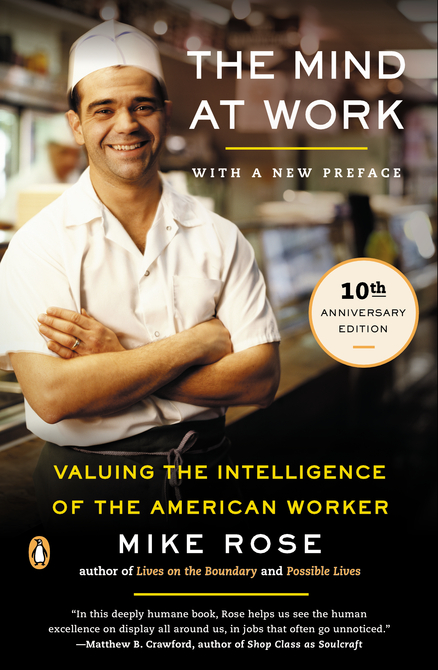
Mindatworkby Mike Rose

If that venerable debunker of inflated language, George Orwell, were alive today, he would gleefully be ripping into the lingo of the “new economy,” particularly taking aim at the gaseous hyperbole associated with digital technology.

To be sure, the last half-century has been a time of significant changes in the organization and technologies of work, and these changes have had huge consequences for workers. But the typical depictions of those changes misrepresent the complex nature of work and the workers who do it. The standard story line—found in political speech, opinion pages, and countless popular books on the new economy—is familiar to the readers of this blog.

Read More

Red-Light-District

Credit: kPluto (Creative Commons: BY-NC-SA 2.0)

by Anthony Marcus, Christopher Thomas and Amber Horning

Many recent public policy discussions about prostitution, especially underage prostitution, invoke disturbing narratives of hyper-violent, predatory pimps luring and coercing young girls into sex slavery. However, three recent studies of underage sex workers and pimps/market facilitators in New York and New Jersey call into question these assumptions. First, these public narratives overestimate the role of pimps in street sex markets; second, they overemphasize the impact of the initial recruitment stage on subsequent practices; and third, they mask or simplify the difficult and complex choices and contingencies faced by minors who sell sex. The studies find that there is in fact no prototypical pimp and relationships are more flexible, dynamic, and particular to the individuals involved than has been previously imagined.

Read More

Saveunions

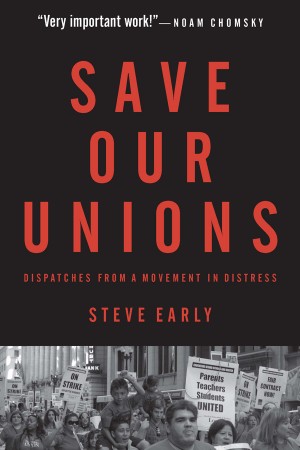
Steve Early. Save Our Unions: Dispatches from a Movement in Distress. Monthly Review Press. February 2014.

Book review by Melanie Simms

Steve Early is a well-known commentator on the complex world of US trade unionism. His analyses are often provocative and always well-informed as he has worked in and around the US labor movement for more than 40 years. This is his third book since he retired from the Communication Workers of America (CWA) union. Evidently he is a man who intends to use the freedom of retirement to stir up debate.

As the subtitle suggests, the book brings together a series of previous pieces he has written for a range of audiences. Typically, they are from the journals, newspapers and websites that cover US labor issues: Labor Notes, Huffington Post, Working In These Times etc. And the tone of the dispatches taken as a whole is distressing. The reader is undoubtedly left with a strong view that the US labor movement is in very deep trouble and that strategies to plot a future course have been ill-fated

Read More