Archive

Research Findings

male-nurse-taking-a-womans-blood-pressure-pv

by Janette Dill, Kim Price-Glynn and Carter Rakovski

It is well documented that occupations that involve paid care work – work that contributes to the physical, mental, social, and/or emotional well-being of others and whose primary labor process involves face-to-face relationships with those they care for – are devalued in comparison to occupations that do not involve care work.

In other words, care workers earn lower wages as compared to other workers when we take into account other work-related factors, such as education and work experience.

Most care work occupations are feminized occupations, meaning that the majority of workers in these occupations are women. In some common care work occupations, such as home health aides or nursing assistants, women make up as much as 95% of the workforce.

Feminized occupations typically pay less than occupations where the workforce is predominately male, but feminized care work occupations are devalued to an even greater extent.

Few men choose to work in care work occupations, but there is some evidence that more men are entering these fields as we transition away from a manufacturing economy and male-dominated jobs become less available and of lower quality. What happens to men that enter care work occupations? Do they experience a wage penalty?


Read More

1200px-Sao_Paulo_Stock_Exchange

by Kim Pernell-Gallagher

In the aftermath of the credit crisis of 2007-2008, the complex financial instrument known as the collateralized debt obligation (CDO) became both a household name and a dirty word.

In the years leading up to the crisis, America’s largest and most systemically important financial institutions developed heavy exposure to CDOs, often by serving as the underwriters of these financial instruments. When the CDO market collapsed in 2008, many of these institutions were forced to take massive write-downs. The losses banks experienced on their CDO portfolios played a major role in bringing about the credit crisis and the Great Recession.

Why, then, did banks underwrite CDOs, an activity that ended up getting them (and the global economy) into so much trouble?

At first glance, the reasons may seem obvious: banks underwrote CDOs because they are competitive, profit-seeking organizations, and they saw that CDOs offered financial rewards. But explanations like these raise more questions than they answer. How did banks come to determine that CDO underwriting was valuable? What kind of information captured their attention?

In a recently published study, I addressed these questions by exploring how 268 U.S. investment and commercial banks responded to the CDO underwriting behavior of their peers, focusing on the years leading up to the credit crisis (1996-2007).

Read More

Asda_checkouts(1)

by Alex J Wood

‘I had to change hours. . . I felt really sick, it just hit me, it hit all of us.’ These are the words that Colin used to describe the painful reality of workplace temporal flexibility for many workers. And it is an experience which is becoming increasingly common.

In the US, economists Lonnie Golden found that 28% of workers report having schedules with variable start and end times. A similar situation exists in Europe where around 35% of workers report facing changes in their work schedule.

The growth of flexible scheduling has caused significant public debate in UK. In particular, the growth of zero hour contracts, a form of employment which does not guarantee any hours of work, figured prominently in the 2015 general election. Labour party leader Ed Miliband coined the term ‘zero-zero Britain’ to highlight the unfairness of a ‘recovery’ in which the ‘rich paid zero tax while the poor received zero hours contracts’.

In response to such criticism the UK government drew upon think tank research to argue that such flexible scheduling was actually a good for workers, enabling them to ‘flex their work… [and thus be] more satisfied with their work life balance.’

In a recently published ethnographic study, I sought to evaluate whether such flexible employment could truly be considered beneficial for work-life balance.

Read More

J4DW

by Joyce Jiang

Migrant workers are an important part of the labour force in many contemporary economies. In the UK, it is estimated that 15.2 percent of the labour force were foreign-born migrants in 2013.

Migrant workers in the UK are largely concentrated in low-skilled sectors that involve high levels of exploitation. They constitute the worker group who are in considerable need of collective representation. However, the industrial sectors where they are concentrated have low rates of unionisation.

Given these points, the potential for collective mobilisation among migrant workers in the UK is an issue of considerable importance.

Read More

Meetingby Steve Vincent

Common sense suggests professional self-employment is liberating, for women in particular. Women are more likely to choose to work reduced hours when self-employed because they bear the burden of domestic responsibilities. As a consequence, careers that promise flexibility can be attractive.

Arguably, self-employed professionals can take control of their working time by spacing contracts with clients. As their work is typically mobilised by technology, they can often choose when and where they work. As a result, they can escape the long-hours culture typical of professional work and pattern their working lives to suit their personal interests.

In short, if employment fails to deliver suitable working patters, self-employed professionals can go their own way.

My recent research questions this common sense view by exploring the practices of self-employed human resources (HR) consultants. The research indicates that self-employed consultants who chose to work fewer hours experienced some fairly intractable forms of disadvantage. Here’s why.

Read More

WIP Smithetal Figure1

by Chelsea Smith, Robert Crosnoe and Shih-Yi Chao

A hallmark of the late teens through the 20s is attainment of social roles that signify the balance of independence, interdependence, responsibility, and productivity widely considered to define adulthood in Western societies. Completing education, taking on full-time work, and starting a family are social signals that someone has left adolescence to become a “real” adult.

This process of becoming an adult, however, looks different for today’s young people than it did 20 years ago. Over the last several decades, the transition into adulthood has become delayed and elongated for two reasons.

First, the decline of the manufacturing sector and growth of the information/service sector have massively reshaped the economy into an hourglass labor market with little middle ground between the security afforded by professional careers and the insecurity of low-wage work. Second, that economic restructuring has affected cultural views about when young people “should” form families—after securing economic independence, which is increasingly difficult.

The transition into adulthood also looks different based on youth’s social class and family background.

Read More

Foreclosure

by Jackelyn Hwang, Michael Hankinson and Kreg Steven Brown

Sometime in 2006, three women in similar financial circumstances bought homes in three different cities, each pursuing the American Dream that finally seemed within their reach. Sophia in San Francisco settled on a 2-bedroom walk-up in a working-class white neighborhood close to where she had been renting for years. She bought the unit with a conventional prime mortgage. Cathy in Charleston found a 3-bedroom craftsman near her current residence in a working-class majority-minority neighborhood. She also purchased her home with a conventional prime loan. Bianca in Baltimore fell in love with a 2-bedroom condo in a working-class section of the city’s predominantly minority West Side and within a few blocks of her parents’ house.

Unlike Sophia and Cathy, Bianca purchased her home with a subprime loan.

Why did Bianca get a subprime loan while Sophia and Cathy did not? With subprime lending booming across the country, what led to these different loans for otherwise similar buyers? Despite living in different cities, all three women bought homes in working class neighborhoods with moderate median incomes and homeownership levels.

The racial make-up of each neighborhood played a role in their likelihood of receiving a subprime loan.

Read More

Dignity

by Kristen Lucas

Vonda accompanied the CEO as he escorted several VIPs around the corporate office to make introductions. “This is where Geoff would sit if he were here today,” the CEO said and pointed to an empty chair in an office that belonged to a high-level manager who was out for the day. The guests laughed and said “hello” to the empty chair. Then they lingered at the door for a couple more minutes as the CEO outlined Geoff’s primary responsibilities and listed several notable accomplishments. Meanwhile Vonda—who did all the behind-the-scenes work of coordinating the visitors’ meetings, meals, and more—was never introduced by name.

Vonda was devastated. “I was standing right there with them the whole time and no one said hello. It was like I didn’t matter, like I was an invisible non-entity. My boss made it clear that Geoff’s empty chair is far more important than me.”

Vonda wasn’t harassed, discriminated against, bullied, or even abused. Her boss didn’t do anything illegal. He didn’t do anything immoral. He didn’t do anything that was explicitly uncivil. In fact, it is likely he didn’t intend to do anything at all. Yet, his introducing an empty chair and overlooking Vonda still was hurtful.

Any degradation of people’s self-worth and self-respect—whether it is triggered by an interaction, a condition of work, or a problematic organizational climate—can be considered a violation of workplace dignity.

In its most basic terms, workplace dignity refers to the self-recognized and other-recognized worth that is acquired from (or denied by) engaging in work activity.

Read More

911-operator

by Matt Vidal and Jill Ebenshade

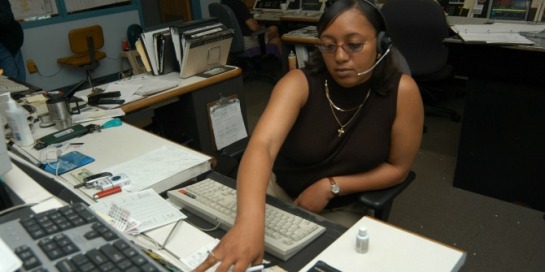
A central focus of the neoliberal ideology that dominates politics today is the privatization and marketization of the welfare state. Where public agencies have been spared from outsourcing or privatisation, they are increasingly subject to private sector management principles and practices, adopted under the banner of reducing public sector costs, increasing public sector accountability and improving service quality.

The two most common management systems adopted in the public sector are business process reengineering and lean, kindred approaches meant to provide comprehensive operations management. Both claim to be customer-driven management models that use process mapping to improve customer service via rationalized workflow and increased process control.

In 2011, the US Department of Agriculture launched a program pushing state and county-level welfare providers to adopt business process reengineering (hereafter, reengineering).

We recently published a case study on the implementation of business process reengineering in the San Diego County Health and Human Services Agency.

Read More

rubineau blog post

by Carroll Seron, Susan Silbey, Erin Cech and Brian Rubineau

Men and women tend to work in different jobs. This tendency, called occupational sex segregation, is a primary cause of the gender pay gap. A recent McKinsey study finds that reducing occupational sex segregation could contribute $2 Trillion to the U.S. economy.

Despite advances toward equality in other areas, occupational sex segregation has remained essentially unchanged over the last quarter century. What keeps some jobs dominated by men and others by women?

Looking at engineering, perhaps the most male-dominated profession, helps understand some of the drivers of occupational sex segregation. In the U.S., less than 20% of undergraduate engineering degrees go to women, and less than 13% of the current engineering workforce is female.

Much ink has been spilled describing factors that lead men to persist or women to leave engineering. Confidence, family plans, a sense of fit, and external encouragement are some such factors.

But how do these gender differences emerge? How are they experienced by students? What happens and when?

To answer these questions, we collected and analyzed twice-monthly diary entries from more than 40 engineering students across four universities during their four years of college: over 3,000 diary entries in all.

Read More