Intertemporal_Choice

Source: Wikimedia Commons.

by Philip Cohen

There is a lot to be said for the common critique of economists: They see society as the product of freely acting, rationally calculating individuals for whom monetary reward is the primary source of motivation. Free markets, to them, are the pure expression of social function and economic growth through their realization is the only outcome that matters.

But people do not simply act rationally to maximize their economic rewards, because they can have incomplete or inaccurate information, ideological biases, conflicting desires or collective interests. Exploitation, dishonesty, violence, ignorance and demagoguery set vast areas of social life apart outside the model. The multiplying exceptions overwhelm the rule bringing the model’s utility into question.

Read More

economic-policy-744x570

Source: Money, by 401(K). CC-BY-SA-2.0 via Flickr.

by Elizabeth Popp Berman and Daniel Hirschman

There’s a puzzle around economics. On the one hand, economists have the most policy influence of any group of social scientists. In the United States, for example, economics is the only social science that controls a major branch of government policy (through the Federal Reserve), or has an office in the White House (the Council of Economic Advisers). And though they don’t rank up there with lawyers, economists make a fairly strong showing among prime ministers and presidents, as well.

But as any economist will tell you, that doesn’t mean that policymakers commonly take their advice. There are lots of areas where economists broadly agree, but policymakers don’t seem to care. Economists have wide consensus on the need for carbon taxes, but that doesn’t make them an easier political sell. And on topics where there’s a wider range of economic opinions, like over minimum wages, it seems that every politician can find an economist to tell her exactly what she wants to hear.

So if policymakers don’t take economists’ advice, do they actually matter in public policy? Here, it’s useful to distinguish between two different types of influence: direct and indirect.

Read More

Nytimes_hq

Source: Wikimedia Commons

by Philip Cohen

The economist Justin Wolfers, writing for the New York Times Upshot, reports that economists increasingly outnumber other social scientists in mentions in the both the Times and — even more — in the Congressional Record. About 1% of Times stories use the word “economist,” more than three-times as often as they write “sociologist.” Here’s his figure tracking Times references:

wolfers-nyt-mentions

In the Congressional Record the economist-sociologist ratio is 20-to-1. I’ll show some other numbers, but first a little setup.

Read More

Nurse_in_geriatry

Source: wikipedia.org (CC BY 2.0)

The Institute of Medicine recently published Dying in America, a sweeping report arguing that the health care system does not match the needs of people as they near the end of life. The dying process, the report explained, is too medicalized and too costly. Such outcomes are predictable consequences of the “perverse financial incentives” embedded in Medicare and Medicaid’s fee-for-service reimbursement formulas.

As much as fee-for-service shapes hospital care, it shapes nursing home care even more profoundly. Nursing home care is expensive and insurance coverage is terribly inadequate. The average daily charge for a night in a nursing home is about $225 per day, or $7,000 monthly and $84,000 annually. Although Medicare is the insurance program for people over the age of 65, it does not cover long-term nursing home care. Medicaid covers those costs, but only after residents’ life savings have been depleted. People in nursing homes who outlive their savings default to Medicaid, which provides insurance coverage until the end of life.

Read More

Red-Light-District

Credit: kPluto (Creative Commons: BY-NC-SA 2.0)

by Anthony Marcus, Chris Thomas, and Amber Horning

Many recent public policy discussions about prostitution, especially underage prostitution, invoke disturbing narratives of hyper-violent, predatory pimps luring and coercing young girls into sex slavery. However, three recent studies of underage sex workers and pimps/market facilitators in New York and New Jersey call into question these assumptions. First, these public narratives overestimate the role of pimps in street sex markets; second, they overemphasize the impact of the initial recruitment stage on subsequent practices; and third, they mask or simplify the difficult and complex choices and contingencies faced by minors who sell sex. The studies find that there is in fact no prototypical pimp and relationships are more flexible, dynamic, and particular to the individuals involved than has been previously imagined.

Read More

AAgradorangeRising productivity, profitability and stock prices have long been heralded as signs of economic recovery from the Great Recession.  Many segments of the population, however, have yet to experience any relief.  Initially concentrated among the upper classes, gains in employment, income and wealth have gradually spread to middle America, but many groups, including race/ethnic minorities and young people have been left behind.

Young people suffered a disproportionate share of job losses in the recession, and current trends suggest that they will be among the last to share in the benefits of economic recovery.  Although a college degree offers some protections in a competitive labor market, it is not uncommon for recent college graduates (males somewhat more than females) to struggle with unemployment for many months following graduation.  Many who do find jobs are underemployed – working fewer hours than they would like or in jobs for which they are overqualified

With an unemployment rate roughly double that of their white counterparts, young African American college graduates have even greater difficulty securing employment.  The Center for Economic and Policy Research reports that in 2013, 12.4 percent of African American college graduates age 22-27 were unemployed, compared to 5.6 of all college graduates in this age group, and more than half of those who had jobs were underemployed.  Those with degrees in the highly sought-after STEM fields (science, technology, engineering and mathematics) fared little better, with unemployment and underemployment rates of 10 percent and 32 percent respectively.

Read More

LBC--_Library_Stacks_and_Tables

Source: Google Images.

by Marianne Cooper

In the fall of 2011, I received an e-mail from Professor Shelley Correll, director of the Clayman Institute for Gender Research at Stanford University. Its subject line read: “An opportunity.” Shelley explained that Sheryl Sandberg, the COO of Facebook, was looking to hire someone to do research for her on women and work and to help translate the research into everyday language for a general audience. This seemed like an intriguing opportunity. I said yes, and a meeting was set up.

At this first meeting, Sheryl and I had a wide-ranging conversation about why so few women get to the top. We talked about structural barriers like gender bias and the lack of flexibility in so many jobs. We also talked about internal barriers such as the fact that women often have lower expectations for success than men. At the end of the meeting, we agreed that I would do a preliminary project and then progress from there. I left with a list of topics she wanted to know more about; on my way out Sheryl said, “It’s important to me that I get the research right.” I took this as a positive sign.

Read More

by Emmanuel Saez and Gabriel Zucman

There is no dispute that income inequality has been on the rise in the United States for the past four decades. The share of total income earned by the top 1 percent of families was less than 10 percent in the late 1970s but now exceeds 20 percent as of the end of 2012. A large portion of this increase is due to an upsurge in the labor incomes earned by senior company executives and successful entrepreneurs. But is the rise in U.S. economic inequality purely a matter of rising labor compensation at the top, or did wealth inequality rise as well?

Read More

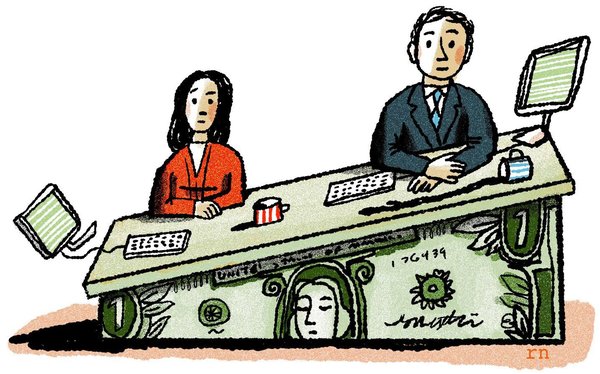
tilt deskThat women are paid less than men at work is not news.  In the U.S., a gender pay gap is nearly ubiquitous.  Even in Hollywood.  We’ve figured out the gender pay gap is largely an artifact of women and men working in different jobs (and the jobs men work in simply pay more than the ones women work in). Yet when women and men work in similar jobs, men still tend to earn more than their female counterparts. What accounts for this difference?

Read More

Harvard sociology professor Orlando Patterson recently had an article published in The Chronicle of Higher Education on “How sociologists made themselves irrelevant.” He discusses how sociologists have had almost no influence on the design of policies dealing with poverty among black youth and related problems such as unemployment, gangs and incarceration, despite the fact that these topics have been core topics of sociological research for decades. He argues that the main problem is that “In the effort to keep ourselves academically pure, we’ve also become largely irrelevant in molding the most important social enterprises of our era.”

As a result, sociologists have been reticent to engage in public discourse. The main shapers of policy have been economists, who often come to radically different conclusions than sociologists, based on differing theoretical assumptions, which affect research design. For instance, sociologists find that moving people out of ghettos has strong positive effects on outcomes for black youth, while economists find that such an effect does not exist. Patterson wryly quips that the rational response to the finding that neighborhoods have no effect on youth outcomes means that scholars should advise their children move to the inner city to take advantage of low rents!