Archive

Commentary

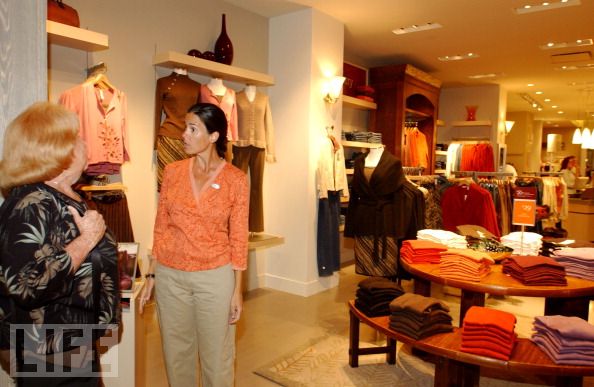
J. Jill employee via Life Magazine

I’ve started to notice more “help wanted” signs in retail stores.  Does this mean that the economy is recovering?  People may be shopping more, and stores may be hiring more.  But retail jobs will never improve this economy unless retail jobs are improved.

In this industry, full-time schedules are rare—most people are hired on a temporary and part-time basis—and pay is slightly more than minimum wage.  These jobs offer neither benefits nor opportunities for advancement.  Although many stores advertise “flexible” schedules, hours are worked only “as needed,” with schedules and hours shifting from one week to the next with little advance warning.  Workers cannot support themselves on the wages from these jobs.

Read More

Media has an immense power to both reflect the society it is a product of and initiate social change. For these reasons, it is often an effective tool for illustrating particular social concepts. The blog Sociological Images frequently uses visual imagery to illustrate a host of sociological concepts in an exceptionally compelling way. In a pair of posts today, Rachael Gorab and Adia Harvey Wingfield discuss the recent Academy Award Winning film The Help in terms of its portrayal of both race and gender in the world of domestic service work. For those of you who haven’t seen it, we’ve embedded the trailer to the film above. We hope you enjoy our latest panel!

Few pastimes are perhaps more uniquely American than going to the movies. Though movie prices continue to increase from their already elevated prices, feature films are fairly accessible for most Americans; they reach a diverse and widespread audience, whether viewed in the theater, at home, or, in today’s technology-driven, ask-and-you-shall-receive society, through instant online streaming via iTunes or Netflix.

Inarguably, blockbuster films often serve as powerful theatric representations of both contemporary and historical social problems and injustices. Through fictional yet theatrical and artistically visual means, popular films have captured the imaginations of millions of Americans, establishing a platform upon which conversations about political and social issues—both in the media and amongst citizens—can and have taken root. Don Cheadle’s 2004 performance in Hotel Rwanda, Sean Penn’s portrayal of gay rights activist Harvey Milk in 2008’s Milk, and 1994’s Philadelphia, which tells the story of Andrew Beckett (played by Tom Hanks), an HIV-positive attorney who is fired on the basis of his medical condition, are all movies that have sparked politically charged conversations about race, sexuality, inequality, and civil rights in the United States.

Read More

Rachael’s post insightfully delves into the ways that The Help has served to motivate domestic workers to organize and push for better treatment, as well as the ways that the film reinforces racialized narratives and stereotypes.  While the film and book are fictional stories based on historical material, sociological research on race, gender, and work provide more nuanced, accurate portrayals of the challenges, issues, and obstacles domestic workers encounter.

In a 2003 article published in the Annual Review of Sociology, sociologists Irene Browne and Joya Misra consider whether the literature on work and occupations provides support for the arguments made by intersectionality theorists. Specifically, inasmuch as an intersectional approach contends that issues of race, gender, class, and other categories are overlapping rather than singular and mutually exclusive, Browne and Misra examine whether key areas studied by researchers in the sociology of work show evidence of this overlap. As part of their analysis, Browne and Misra look at the literature on domestic workers to consider whether this indicates interactions of race, gender, and class. These authors note that the overwhelming preponderance of women of color–particularly immigrant women of color–in this profession signifies employers’ preference for certain workers to do this type of labor. Additionally, the low pay afforded to most domestic workers further signifies the ways that race, gender, class—and in this case, nationality—are intertwined.

Read More

Last week the WSJ printed an article describing how CEOs around the world spend their time.  The article drew on data from a larger study, the Executive Time Use Project , and relied on reports of time use by CEO’s personal assistants.  The article indicates that assistants only tracked activities that lasted over 10 minutes in a single week selected by researchers.  That assistants, rather than the CEOs themselves, were keeping track of time use leads me to believe the reports are relatively accurate.  After all, the assistant probably does most of the scheduling of a CEOs day and CEOs are likely too busy to track data time or to agree to record their time use.

Read More

I recently wrote a blog post on The Mythology of Steve Jobs, in which I noted what I take to be a fairly standard understanding among sociologists: that technical innovation is generally the outcome of collective labor and that major innovations are generally produced by well-funded teams of researchers working in places protected from market forces.

The upshot is exactly the opposite of the standard story on innovation we get from mainstream economics. According to the latter, innovations are the result of individual entrepreneurs and are best fostered by intense market competition. But this simply does not fit the history of major innovations. This is shown very clearly in a recent article in the New York Times Magazine by Jon Gertner on the history of Bell Labs.

The article is a bit long, but very insightful and well worth a read. Let me just note a few highlights. Gertner explains that the researchers at Bell Labs were given “years to pursue what they felt was essential. One might see this as impossible in today’s faster, more competitive world.”

Read More