Archive

Panels

Few pastimes are perhaps more uniquely American than going to the movies. Though movie prices continue to increase from their already elevated prices, feature films are fairly accessible for most Americans; they reach a diverse and widespread audience, whether viewed in the theater, at home, or, in today’s technology-driven, ask-and-you-shall-receive society, through instant online streaming via iTunes or Netflix.

Inarguably, blockbuster films often serve as powerful theatric representations of both contemporary and historical social problems and injustices. Through fictional yet theatrical and artistically visual means, popular films have captured the imaginations of millions of Americans, establishing a platform upon which conversations about political and social issues—both in the media and amongst citizens—can and have taken root. Don Cheadle’s 2004 performance in Hotel Rwanda, Sean Penn’s portrayal of gay rights activist Harvey Milk in 2008’s Milk, and 1994’s Philadelphia, which tells the story of Andrew Beckett (played by Tom Hanks), an HIV-positive attorney who is fired on the basis of his medical condition, are all movies that have sparked politically charged conversations about race, sexuality, inequality, and civil rights in the United States.

Read More

Rachael’s post insightfully delves into the ways that The Help has served to motivate domestic workers to organize and push for better treatment, as well as the ways that the film reinforces racialized narratives and stereotypes.  While the film and book are fictional stories based on historical material, sociological research on race, gender, and work provide more nuanced, accurate portrayals of the challenges, issues, and obstacles domestic workers encounter.

In a 2003 article published in the Annual Review of Sociology, sociologists Irene Browne and Joya Misra consider whether the literature on work and occupations provides support for the arguments made by intersectionality theorists. Specifically, inasmuch as an intersectional approach contends that issues of race, gender, class, and other categories are overlapping rather than singular and mutually exclusive, Browne and Misra examine whether key areas studied by researchers in the sociology of work show evidence of this overlap. As part of their analysis, Browne and Misra look at the literature on domestic workers to consider whether this indicates interactions of race, gender, and class. These authors note that the overwhelming preponderance of women of color–particularly immigrant women of color–in this profession signifies employers’ preference for certain workers to do this type of labor. Additionally, the low pay afforded to most domestic workers further signifies the ways that race, gender, class—and in this case, nationality—are intertwined.

Read More


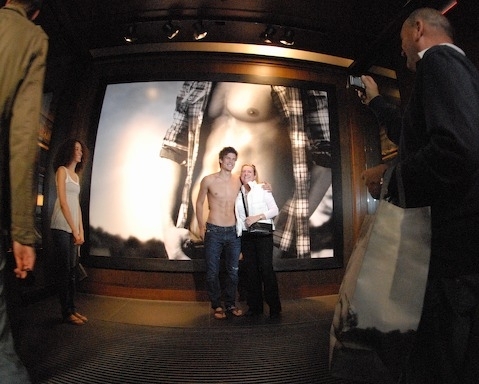
Photo via Improv Everywhere 

The photo above, of an Abercrombie model posing with customers, embodies the sociological concept of aesthetic labor. Sociologists have been particularly interested in this phenomenon, which is the inclusion of an employee’s ‘look’ or ‘feel’ into the workplace. In many places, including some elements of the retail industry and the modeling industry, being a good or desirable employee is defined not just by the skill with which work is done, but also by the aesthetic qualities of employee.

We are posting a three part commentary today discussing the phenomenon of aesthetic labor. The initial post by Ashley Mears describes her work as a model in New York City’s fashion industry. The second post, by Emily Cummins, describes aesthetic labor, gender and the wedding industry. Finally, we are pleased to feature some commentary by Jeff Sallaz on the concept of aesthetic labor itself.