Image: Walters Art Museum via Google (CC by 3.0)

Image: Walters Art Museum via Google (CC by 3.0)

by Karla A. Erickson

For those of us who are already adults in 2015, we are most likely to die due to multiple chronic conditions in old age. Our lives will be longer and our deaths will be slower than our distant ancestors, our parents, even those who were born just a decade earlier than us. From a labor perspective, our longer lives and slower deaths require many more days, months and years of assistance. Enter the ever-growing labor force of workers I call end-of-life laborers.

The “grey tsuanami,” as some scholars call it, is coming, whether or not we are ready. The United States, like many similar nations, is on the brink of a care crisis. We’ve faced teacher shortages in the past, but our focus in the coming decades will necessarily shift all the way to the other end of life. As scholars of labor, we need to prepare to inform the coming re-direct of attention, labor, policy and practice that will accompany the grey tsunami.

Average life expectancy has risen by 30 years in the last 100 years. The benefits of what I call the longevity dividend are not equal. White females born in 2010 are expected to live almost 4 years longer than their black male counterparts. More than half of the babies born in this decade in advanced industrial nations are expected to live to be 100.

Read More

Image: Julie Jordan Scott via Flickr (CC BY 2.0)

Image: Julie Jordan Scott via Flickr (CC BY 2.0)

by Brian C. Thiede, Daniel T. Lichter, and Scott R. Sanders

Pundits and politicians in the U.S. frequently assume that poverty is the result of joblessness and idleness, and in contrast, upward social and economic mobility is possible for anyone given sufficient work effort. Such assumptions about work and poverty underpin many social policies. For example, minimum wages are largely designed to ensure that work is remunerated with a basic, presumably above-poverty standard of living. Stringent time limits and work requirements on many so-called safety net programs also presume that incentivizing work is an effective means of reducing poverty and public sector dependence.

In contrast to these assumptions, however, evidence suggests that a large share of the poor live in families which are attached to the formal workforce. Yet to date researchers have produced a rather limited set of empirical findings about the working poor. In our judgment, this knowledge gap has largely been due to inconsistent conceptualization and measurement of the working poor across studies. To address this gap, our research has examined the conceptual and normative assumptions behind different measurement choices for studying the working poor, and compared empirical estimates based on a range of measures.  Our findings demonstrate that working poverty is a widespread problem, but also show that estimates of the magnitude of the problem are sensitive to measurement choices.

Read More

Image: Jamain via Wikimedia Commons

Image: Jamain via Wikimedia Commons

A few months ago, I spent several days at a conference on a topic that holds great intrinsic interest for me. I signed up for the conference, eagerly anticipating meeting new people and being challenged with novel ideas. I had never attended the conference before and had few preconceived notions about the format for presentations. However, because most of the scholars were in the humanities, I knew that I wouldn’t be seeing many tables of numbers or hearing about esoteric statistics!

What I wasn’t prepared for was being read to. Over the course of several days, almost every speaker read their presentations from pre-prepared scripts. In one typical session, the first two presenters held their papers with two hands, looked up occasionally, and put the paper down only to change the PowerPoint pictures. They read well, using inflection and pitch to emphasize important points, but it was still a word for word matching of oral presentation to the text. The third presenter had a script but had done a better job in memorizing it, as she made occasionally made eye contact with us and did a fairly good job of disguising the fact that she was reading.

As I always try to do in conferences, I had made a point of sitting in the first row, so I could see the slides clearly and also have a clear view of the presenters’ faces. I found that being able to see faces helps me catch meanings I otherwise might miss when I don’t hear all the words.

Despite my advantageous location, where I should’ve been in the thick of the action, there wasn’t any. I found my attention wandering, and to stay focused, I tried taking notes of the key points that I heard. As often happens, my notes quickly became observations on the format of the presentations and not just their contents.

Why couldn’t I stay focused on the content?

Read More

Unite Here rally for BWI workers in Annapolis, MD. Image: United Workers via Flickr (CC BY 2.0)

Unite Here rally for BWI workers in Annapolis, MD. Image: United Workers via Flickr (CC BY 2.0)

by Barry Eidlin

In the 2016 presidential race, candidates from both major parties are looking for ways to address inequality.

Partly, they must do so because seven years after the 2008 crash, many Americans still aren’t getting ahead, according to several analyses by the Economic Policy Institute think tank. In fact, that’s nothing new. Factoring in inflation, wage growth has stagnated for the bottom 90% of Americans since 1979.

In the campaign ahead, these struggling Americans will be called many things: “forgotten,” “hardworking,” “ordinary,” “everyday,” and of course, “middle class.”

What they will not be called is “working class.” To the extent that anyone refers to the “working class,” it will be as a not-so-coded reference to white, male, blue-collar workers, even though the term can apply to people of both genders, and any race, in many different sorts of work.

This failure to talk about class obscures one of the primary drivers of the growth in income inequality: the decline of labor unions. Research I’ve been conducting on the intersection of political sociology, inequality and social policy suggests that union decline is linked to a political process that has pushed class issues off the table in the US – unlike Canada, where the income gap hasn’t widened nearly as much.

If the current crop of US presidential candidates really wants to address the growing inequality gap in America, getting class back on the agenda would be a good place to start.

Read More

Christmas

Bradley Graupner via Flickr (CC BY-NC-ND 2.0)

by Kenneth Wee and Karla Erickson

“The paradox of education is precisely this – that as one begins to become conscious one begins to examine the society in which he is being educated.”

– James A. Baldwin

In 2011, a Pew Research Center report found that nearly half the American public considered teaching students job-relevant skills and knowledge to be the defining purpose of a four-year college education. While a good three quarters (74%) of college students walk away from their alma mater feeling like they have grown intellectually and personally, only 39% considered that the central aim of their education. As more and more fresh undergraduates regret not gaining more work experience while in school, overwhelmingly major in STEM fields and business, and identify “getting a better job” as a main reason for attending college, the strings that tie education to employment have only tightened.

Ironically enough, the ancient philosopher Plato might offer us the best take on neoliberal education yet: “education is teaching our children to desire the right things.”

Curiously, it was really only after World War II, when breakthroughs in manufacturing technology and expanding global markets brought demand for skilled labor, that American universities and colleges started explicitly seeing education through the lens of occupation. Larger universities like the University of California at Berkeley – whose president Clark Kerr claimed that colleges existed to “produce socially and economically useful knowledge” – set a precedent for smaller colleges by driving industrial research and equipping students with employable skills. As the post-war economy grew and college became the new highway to the American Dream, enrollments across higher education institutions tripled between 1950 and 1970.

Read More

Image: Paul Townsend via Flickr (CC BY-NC 2.0)

Image: Paul Townsend via Flickr (CC BY-NC 2.0)

by Devah Pager & David S. Pedulla

Discrimination in hiring continues to limit the opportunities available to racial minorities, with important consequences for their economic security and career trajectories. But, how do racial minorities respond to this reality when they are searching for employment? Some argue that job seekers tailor their searches in ways that allow them to avoid discrimination. Others suggest that job seekers adapt by casting a wider net in their search.

Until now, we have known little about this process, largely because no existing data source has closely followed individuals through their job search. In recent research, we attempt to address this limitation by drawing on two original datasets that track job seekers and the positions to which they apply. The results of our study point to three general conclusions about patterns of self-selection and job search:

1) Broader Job Search among African Americans than Whites: African Americans cast a wider net in their job search than similarly situated whites. Specifically, they include a greater range of occupation types and occupational characteristics among the jobs to which they apply. For example, consider one of our respondents whose last job was as a “material moving worker.” Over the course of the survey, this respondent applied for jobs consistent with his prior work experience, such as “material handler” and “warehouse worker.” However, the respondent also reported applying for jobs in retail sales, as an IT technician, a delivery driver, a security guard, a mailroom clerk, and a short order cook. This respondent applied to jobs in a total of seven distinct occupations over the course of the survey, reflecting a fairly broad approach to job search. While this is just one example, in both of the datasets we examined African Americans systematically applied to a larger number of distinct job types than whites with similar levels of education and work experience.

2) Narrower Job Search among Women than Men: Our study demonstrates that the search strategy of African Americans appears very different from that of women. Women self-select into distinctive (and highly gendered) occupational categories, considering a narrower range of occupational types and characteristics over the course of their job search relative to similarly situated men.

3) Labor Market Discrimination Appears to Drive Search Behavior: We find that perceptions of or experiences with racial discrimination play an important role in explaining the greater search breadth exhibited by African American job seekers. Individuals who have witnessed or experienced racial discrimination in the workplace are more likely to cast a wide net in their job search relative to those without such experience.

Read More

Image by the author.

Image by the author.

by Rina Agarwala

Since the 1980s, as governments have reduced state welfare rhetoric and policy, the proportion of unprotected, “informal” workers has increased. As a result, we have witnessed an unexpected increase in the proportion of the world’s workers who do not receive secure wages or social benefits either from employers or the state. This is not news. In recent years, many scholars and policy makers have highlighted this growing population of unprotected workers, variously calling them “informal”, “precarious”, “casual”, “non-standard”, “Post-Fordist”, and “flexible.” In some cases, these trends are celebrated; in others, they are critiqued.

What explains the worldwide increase in informal employment? The most common explanation is that the pressures of increased competition in a globalized and liberalized marketplace have forced firms to decrease costs by relying on unprotected workers. While this is true, it is equally important to remember that informal work is not a product of neoliberalism. Long before the rise of neoliberalism, informal labor comprised a large section of the labor force in the Global South, because they subsidized the minority of formally employed, protected workers that emerged during the industrialization era (in the South and North).

Informal workers have long been, and not surprisingly continue to be, a central, structural feature of modern economies. After all, it is informal workers that have and continue to (albeit in increasing numbers) construct our buildings, build our roads, grow and sell fruits and vegetables, clean homes and streets, sew clothes, weld car parts, and make shoes – not to mention the boxes they come in.

Read More

In Oct-Nov of 2014, we ran a virtual symposium on “The future of organizational sociology,” with short contributions from 14 organizational sociologists. We have now compiled all of those contributions into a single pdf document (just over 17,000 words), which can be found here.

We hope that many will find this document useful, particularly for academics teaching organizational sociology, but also non-academics wondering what organizational sociology is all about and wanting to have the views of a number of leading organizational sociologists in a single document. With any luck, the ideas in this document may also help some young PhD students who are trying to figure out a topic for their PhD thesis!

The workstation of the future in “Big Hero 6” (2014) Image: DisneyLifestylers via Flickr (CC BY 2.0)

The workstation of the future in “Big Hero 6” (2014)
Image: DisneyLifestylers via Flickr (CC BY 2.0)

by William Attwood-Charles and Juliet B. Schor

The image of the U.S. worker and U.S. workplace is in the midst of a transformation. Stable, full-time employment is increasingly scarce and many firms are organizing work around projects rather than fixed tasks or competencies. Workers, particularly in knowledge intensive industries, are expected to self-manage and collaborate as teams, a dramatic shift from Fordist and Taylorist systems that emphasized direct supervision, simplification, and standardization as techniques for coordinating production. Thus, while the dominant image of the U.S. worker in the 1950s might have been the industrial laborer, arguably the new face of U.S. industry is that of the “maker.”

Urban Dictionary (always on the forefront of linguistic innovation), defines makers as “those who love to create things in their spare time (often electronic, often with their own hands). Also called Hobbyists.” These passionate, multi-skilled tinkerers are offered in exuberant think pieces (here, here and here) as the engine of the New Economy. Indeed, the Maker is arguably having a cultural moment with Disney’s release of its animated movie, Big Hero 6, which features a group of tech-enabled wunderkinds fighting a scorned research professor.

Putting aside the fashionable aspect of the maker movement, it fits squarely within a trend over the last four decades to flatten hierarchies and promote open and egalitarian workplace arrangements. To understand how the architects of leveling hope to achieve these goals, it is first useful to examine what the leveled workplace is situated against; namely, the conventional hierarchical and bureaucratic world of work. In doing so, we can have a better idea of how hierarchies are produced in ostensibly leveled environments, as well as the meaning of status hierarchies in domains where they should be absent.

Read More

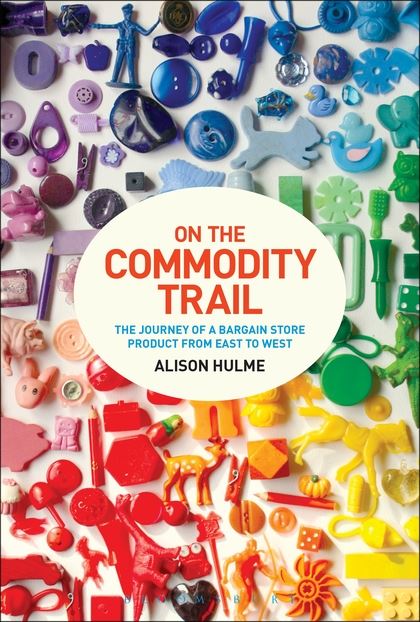
On the commodity trailby Susan Marie Martin 

On the Commodity Trail: The Journey of a Bargain Store Product from East to West. Alison Hulme. Bloomsbury. February 2015.

‘Euro shop’, ‘pound shop’, ‘dollar store’. The name varies but the premise is the same: commodities sold at low prices. For many the relationship with the ‘bargain’ shop is fraught by love and loathing.  Loathing is prompted by the cheap nonessentials, and the thought of the sweatshop labour that produced them. Love comes from the pursuit of a bargain, and the smug feeling that we have not been exploited.

In boom times discounters seem reserved for the terminally cheap, or those whom prosperity has overlooked. But what of their place in an era of austerity? Historically, according to Alison Hulme, times of decline were not like the present: saving back then meant not spending. However, she tells us on the first page of On the Commodity Trail, this current ‘age of austerity’ is not like its predecessors.  Now cheap and plentiful helps maintain levels of consumption seen during the boom, and cements individual mantras of “consumption is good”. For the businesses involved this means “chasing growth through smaller and smaller profits”.

If our age is “characterized by the desire for immediate gratification, disposability, the fragmentation of old systems and the rise of China” then, she asserts, the commodity chain of bargain store products “is a classic trail of our times”. Hulme subsequently takes the reader on a journey across the life cycle of eight bargain store commodities: a pet gravestone, a pregnancy test, a garden gnome, a plastic bonsai, a model Buddha, plastic flowers, a Chinoiserie vase, and a ship-in-a-bottle. Hulme’s inspiration was the early twentieth century work of the German philosopher and cultural critic, Walter Benjamin, and his Arcades Project. However, unlike Benjamin’s focus on the “bijou objects of bourgeois Paris”, she opted to create an ‘Arcades Project’ of the pound shop.

Read More