Archive

Author Archives: Guest Contributor

ot_0115_img_blogjan19-30_nam_eng_jan-26-1_0

by Hana Brown

Each new wave of immigration to the United States has raised questions about whether immigrants will integrate into American society or undermine its core values. Public fears abound, but experts paint an optimistic portrait of immigrant adaptation. The available evidence suggests that incorporation proceeds apace, but that immigration integration trends are patterned by factors like geography, public policies, and legal status.

In a recent study, I identify another factor that influences immigrant incorporation: the physical body. I find that immigrants’ ability to incorporate economically and socially depends in part on their ability to incorporate bodily. That is, it depends on their ability to retrain their bodies to perform the kinds of physical movements required for full membership in the host society.

From a young age, individuals around the world learn how to perform the physical movements expected by their society. In the United States, children’s toys teach them to perform fine motors movements like pushing buttons on a telephone or tapping a keyboard with the appropriate level of force. These toys aren’t merely for entertainment. They teach children to perform the physical actions required to access the most influential institutions around them.

These socialized movements are so ingrained that we hardly notice them. But when people move between societies with radically different embodied expectations, the physical body can pose a real struggle in the adaptation process. This is precisely the situation in which the immigrants I studied found themselves.

Read More

mother-and-baby-in-park

by Paula England, Jonathan Bearak, Michelle J. Budig, and Melissa J. Hodges

Most American moms go back to work after having a baby—sometimes almost immediately, sometimes after some hiatus. In the years after they have given birth, employed women suffer what sociologists call a “motherhood wage penalty.”

That is, their pay when working in the years after having the baby is lower than it would have been if they hadn’t had a baby. This is partly because they miss any raises or promotions they would have gotten during the period they were out of work. Another reason for the penalty is that some employers discriminate against mothers, treating them worse than they treat other women in hiring, pay, or promotion.

Read More

mariana-craciun

by Mariana Craciun

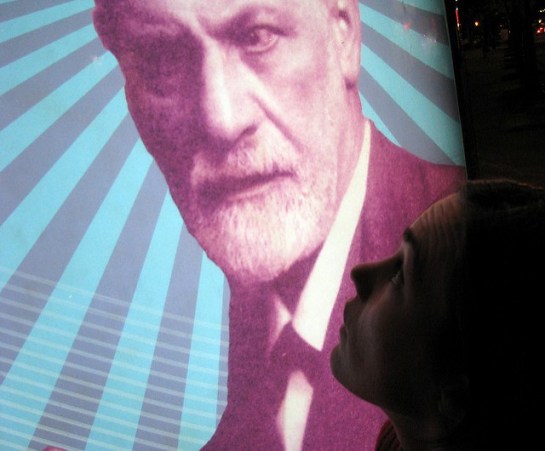
“I think people have all sorts of fantasies … that [psycho]analysts have certain … special capacities to … see through [them].” – Adam, psychoanalytic therapist

That professions no longer enjoy the relatively uncontested authority they had during much of the twentieth century is no surprise. Medicine has received sustained attention in this regard. Physicians have seen their power threatened as their financial ties to patients are overwhelmingly mediated by third-party payers, while their work diagnosing, treating, and researching disease is increasingly shaped by patients themselves.

In medicine, as in other professional realms, internet-based knowledge-sharing has made it easier for potential clients to attempt to diagnose and solve problems themselves rather than rely on expert “opinion.”

These challenges are shared by practitioners of psychoanalytic therapy, but further exacerbated by their own slippage within the field of mental health. Over the last forty years, psychoanalysis has been progressively displaced from its dominant place. U.S. psychiatry has been challenged by psychopharmacology, alternative talk, and behavioral interventions.

Yet, despite these challenges—and arguably even because of them—psychoanalytic therapists continue to perform and enjoy a level of charismatic authority sometimes assumed to have existed only during the community’s beginnings.

Read More

4241390495_e0a928ccf0_oby Peter Ikeler

Many observers lament the bloated size of low-wage service employment in the U.S. They contrast high levels of precarity and minimal wages and benefits in retail, restaurant and personal services unfavorably with past standards in manufacturing, even if contemporary manufacturing has few of these traits.

Underlying such contrasts is often the assumption that frontline service jobs, since most don’t require a college degree, are low-skill. But is this, in fact, true? And how are their skill requirements changing?

In a recent study, I interrogated these questions and related ones about worker consciousness and organizing.

I honed in on Macy’s and Target, two iconic firms in the department store sector which is the largest division of the America’s largest low-wage service industry. I interviewed sixty-two workers from five stores in New York City.

What emerged were two key lessons: For one thing, not all service jobs are low skill. In fact, many Macy’s sales jobs require considerable knowledge, complexity and interpersonal know-how.

Second, the general trend in the department store sector is deskilling. Comparing Macy’s and Target as representatives of the full-line and discount models, there is undeniable simplification and routinization of salespersons’ tasks, with a related decline in their daily autonomy.

Read More

mop

by Gretchen Purser and Brian Hennigan

The passage of welfare reform in 1996 reshaped the principles and practices of poverty management in the U.S. Most notably, it brought about an end to welfare as an entitlement and imposed rigid time limits, work requirements, and a programmatic focus on “job-readiness.”

Less well known is the fact that welfare reform also decentralized and privatized welfare delivery, opening the door for faith-based organizations to play a more formal and zealous role in the delivery of social services as well as the moral tutelage of the poor.

This two-fisted overhaul of social policy was not a happenstance conjuncture. Rather, it reflects the ascendance of what Jason Hackworth, in his 2012 book Faith-Based, calls religious neoliberalism: the “ideological fusion” between conservative evangelicals and neoliberal politicians that calls for the shrinking and privatization of the welfare state while promoting the faith-based sector as its ideal replacement.

Read More

unemployment

by Aliya Hamid Rao

“How’re you going to find a job when you have no confidence and are very emotional?”

Emily Bader, an office administrator asked me this rhetorical question when I interviewed her about her husband’s unemployment. Emily was worried about her husband, Brian, currently unemployed, who used to work as a project manager. She was concerned about the personality he projected when he went on job interviews. She thought he needed to be confident and upbeat. In his interview with me, Brian agreed with this.

But, after half a year of being unemployed and job-searching, Brian was down in the dumps. Projecting cheer was difficult for him. Emily worried about Brian, but she also worried about when and whether he would find a job. She worried for their future.

Being unemployed is difficult. There is a lot on the line: money, your relationship with your spouse (especially if you’re a man), and feelings of shame and stigma are just some of the negative impacts of unemployment.

But if you’re a white-collar worker, job-searching means showing your best side even you feel your worst. It means convincing potential employers that you not only have the right skills, but, as on a date, you also have “chemistry” with the employers. As sociological research has shown, job-searching and going on job interviews requires tremendous amounts of what sociologist Arlie Hochschild called emotional labor – “the management of feeling to create a publicly observable facial and bodily display.”

Emotional labor is usually done for the benefit of employers, for pay, while its counterpart in the private realm of the family is not done for pay. The white-collar job seeker has to show that he or she is upbeat, cheerful, enthusiastic, and passionate about each job he or she applies to.

But, as I show in a forthcoming article, job-seekers don’t work on their presentation of self alone, nor are they the only ones to worry about how they perform in their job interviews.

Read More

C522-1-WH64

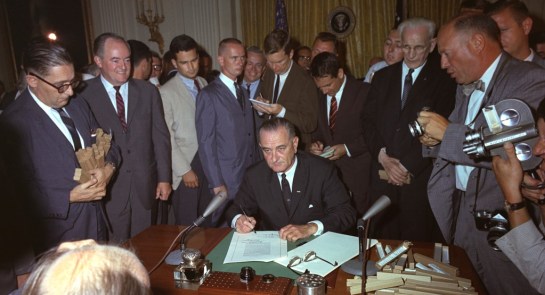
President Lyndon B. Johnson signs the Civil Rights Act of 1964 (Source: Wikimedia Commons)

by Hadas Mandel and Moshe Semyonov

Following the implementation of the 1964 Civil Rights Act and the enactment of affirmative action policies in the United States, both the educational level and the relative income of black men and women rose. Consequently, earnings disparities between blacks and whites declined; this trend continued until the end of the 20th Century, for both genders.

But from the turn of the new millennium, the trend reversed for women and men for the first time since 1970. In light of the continual convergence in black and white pay and the gender differences in the size and sources of the pay gaps, this uniform reversal of the trend is intriguing.

Read More

disrupted

by Benjamin H. Snyder

The twenty-first century workplace compels Americans to be more flexible. To embrace change, work with unpredictable schedules, be available 24/7, and take charge of one’s own career. What are the wider implications of these pressures for workers’ lives? How do they conceive of good work and a good life amid such incessant change?

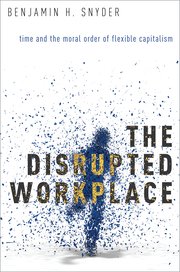
In my recently published book, The Disrupted Workplace, I consider these questions in light of three groups of American workers—financial professionals, truck drivers, and unemployed job seekers. I look at how they construct moral order in a capitalist system that demands flexibility.

Based on seventy in-depth interviews and three years of participant observation, I argue that the flexible economy transforms how workers experience time. New scheduling techniques, employment strategies, and technologies disrupt the flow and trajectory of working life, which makes the workplace a site of perplexing moral dilemmas. Work can feel both liberating and terrorizing, engrossing in the short term but unsustainable in the long term.

The book contributes to conversations about the human costs of flexible and precarious work by examining how both high and low status workers construct moral order within workplaces and careers that are chaotic and shifting.

Read More

fridmanby Daniel Fridman

Donald Trump’s recent resistance to cutting ties with his personal businesses suggests that he is unconcerned by the appearance that he may benefit financially from being president of the United States. His appeal as a billionaire, and his ability to use his wealth as an asset with voters of vastly different economic means, helps explain his lack of concern.

How did Donald Trump, a billionaire who lives in a Manhattan penthouse full of golden furniture and travels by private jet to his Mar-a-Lago mansion, manage to connect with vast swaths of the U.S. electorate?

One key to understanding Trump’s allure is his experience in the wildly popular financial self-help circuit. As a book author and a well-paid speaker, Trump learned a thing or two about the “common folk” who aspire to financial freedom and who revere the rich people who are “out of the rat race.” It was in this world that Trump perfected his charismatic performance in front of live audiences who were unhappy with their financial lives and sought change.

Read More

re-agent-v1

by Max Besbris

Consumers generally hope that, when making large purchases, they weigh the objective conditions of the market along with their finances and idiosyncratic tastes. Yet consumers often find themselves without the necessary time to learn about every possible product so they turn to experts and brokers who presumably know more about a particular market.

In the housing market, this means using real estate agents to help sort through all the available houses in a desired neighborhood and within a given price range.

In a recent study published in Socio-Economic Review, I show that agents do a lot more than just show prospective homebuyers available units. Part of their work is to get buyers to feel different emotions during the search process. These emotions then impact economic decisions.

Read More